
Complaints of Rashes, Lead Exposure by Residents Went Ignored for Months
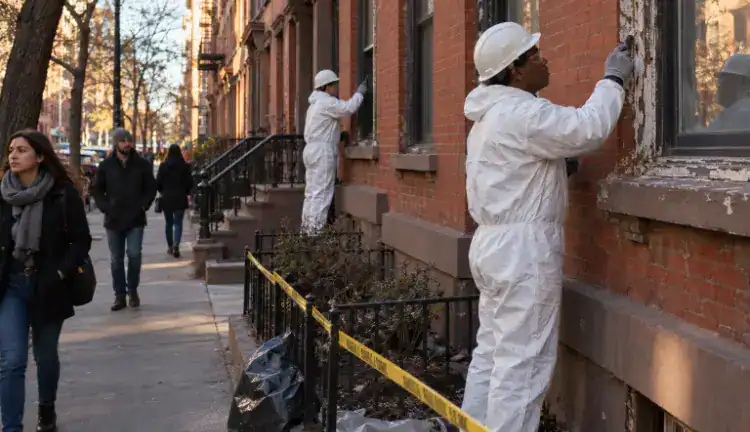
“Government failed you — federal, state and local leaders — by breaking the trust you place in us,” Michigan Governor Rick Snyder conceded in his State of the State address last week after months of ignoring Flint residents’ complaints about contaminated water. “I’m sorry, and I will fix it.”
The Governor’s apology, and the $28 million emergency fund subsequently granted to the city of Flint by the Michigan House of Representatives may seem like adequate reparations, but to many residents of the poor, mostly black community of Flint, the government response is much too little too late.
In early 2014, the city of Flint switched its water supply from Lake Huron to the Flint River, regarded by many locals as a contaminated waste dump, in order to cut costs. The switch was estimated to save $1 to $2 million per year, a fraction of the costs already spent by the city and state to repair the damage inflicted on residents over the last year.
Soon after the water supply switch, Flint residents started complaining about the water’s color and odor, as well as the rash-like symptoms that many developed. Outraged locals carried “jugs of brownish water” to city events in protest.
The GM plant located in Flint stopped using tap water when it was found to corrode factory parts, and a local hospital switched to bottled water after complaints that Flint River water caused damage to their instruments.
In addition to prior bacterial and chemical contaminations, the Flint water supply was found to contain enough lead to show up in residents’ blood tests. Even minuscule amounts of lead in the bloodstream can cause development problems in children.
For months, Flint residents’ protests fell on deaf ears. In a private email released to the public last week, one of Governor Snyder’s top aides described those protesting in Flint as an “anti-everything group.”
By the time Governor Snyder made his public apology to the city of Flint, the water crisis had already become a national news story. It was discussed in the Democratic presidential debate last week, and both the Environmental Protection Agency and President Obama condemned the state government’s delayed response.
“The notion that immediately families were not notified, things were not shut down — that shouldn’t happen anywhere,” said Obama to CBS News.
It took national news coverage to shame Governor Snyder and the Michigan House to begin to address the problems in Flint. Both the decision to switch water sources in order to save money, and the city and state government’s unwillingness to help the residents for months reflect a lack of concern for the underprivileged city.
“The message is clear to us,” said Flint resident Dan Reyes, “Flint is a predominantly minority, poor community. In Flint, you don’t matter to Snyder’s brand of politician.”
There are already 3 class action lawsuits filed against the state for issuing “false assurances” that the city’s lead-contaminated water supply was safe to drink. It is our hope that every Flint resident that suffered at the hands of an apathetic state government is fully compensated for their damages.
Sources: Bosman, Julie, Monica Davie and Mitch Smith, “As Water Problems Grew, Officials Belittled Complaints From Flint,” The New York Times, 20 January 2016.
Bosman, Julie and Mitch Smith, “Gov. Rick Snyder of Michigan Apologizes in Flint Water Crisis,” The New York Times, 19 January 2016.
Shapiro, Emily, “Flint Residents Were Given ‘False Assurances’ Water Was Safe, Lawsuits Allege,” ABC News, 19 January 2016.
Related Practice Areas
Image note: photographs accompanying our blog articles are illustrative and digitally created. They do not depict actual clients, actual attorneys of this firm, or actual events.
Read more

Beyond the App: Unmasking Uber’s Strategy to Evade Passenger Liability
When a passenger steps into an Uber on the streets of New York, there is an implicit expectation that the multi-billion-dollar ride-hailing giant stands behind the safety of that journey. Yet, in courtrooms and arbitration proceedings across the country, Uber’s primary defense line remains remarkably consistent: we are merely a technology platform, not a transportation […]

When the Safety Net Fails: What Michael Wagner’s Story Teaches NYC Construction Workers About Labor Law 240(1) & Injury Rights
In the immediate aftermath of a severe construction site accident, most injured workers focus on one thing: getting back on their feet. They assume that if they play by the rules, report the incident, and file their claims, the safety net will be there to protect them and their families. Unfortunately, as millions of workers […]

Can New York City Be Liable for a Dangerous Street or Intersection?
When a pedestrian, bicyclist or motorist is seriously injured in a New York City traffic accident, the investigation should not always end with the drivers involved. In some cases, the design, operation or maintenance of the roadway itself may have contributed to the crash. New York City has a duty to maintain its streets in […]