
35 Patients Dead After A Medical Device Manufacturer Started Cutting Corners
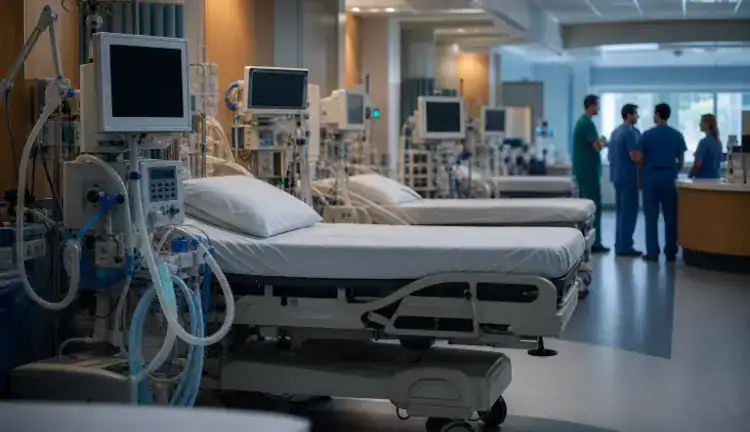
In the five years between January 2010 and October 2015, roughly 350 patients have undergone gastrointestinal procedures with contaminated scopes produced by the Tokyo-based company Olympus Corp. Dozens have died as a result.
The product, called the duodenoscope, is used in 700,000 procedures every year in America alone. Doctors insert the scope into patients’ throats in order to identify and treat health problems in the digestive tract. A design flaw makes the duodenoscope difficult to clean between procedures, allowing the transfer of bacteria from patient to patient. So far, we have seen outbreaks in Los Angeles, Milwaukee, and Denver among other American cities.
The worst part about this story is that Olympus has been aware of its design flaw for years. They chose to ignore it.
In 2012, an independent investigator hired by Olympus found that the duodenoscope tended to trap blood and tissue of the patients on whom it was used. He urged the company to launch a worldwide investigation into similar products and recall those found to endanger patients. But no worldwide investigation was launched.
In January 2013, following outbreaks in France and Holland, Olympus warned its European customers of the duodenoscope’s infection risk. But no warning was given to American hospitals.
Later that month, Pennsylvania-based Olympus VP Laura Storms sent an email to Susumu Nishina, the company’s chief manager for market quality administration, asking if American executives should “also be communicating to our users the information that [Olympus Europe] is communicating to their European users?”
The response she received stated that Ms. Storms should only discuss the health risk with customers that ask questions about it. No broad warning should be issued because the risk was deemed “acceptable.”
Since that email was sent, 35 patients have died in American hospitals as a result of infected duodenoscopes.
Ms. Storms did not stop there. She wrote another email to Nishina to request additional details about the company’s determination that previous infections were caused by hospital error, not the design flaw. “Specifically what evidence does OMSC [Olympus Japan] have that supports inadequate reprocessing by UPMC [University of Pittsburgh Medical Center]? You do not cite any objective findings, testing, etc. for this endoscope model,” Ms. Storms wrote.
However, the company insisted that the duodenoscope was safe, and “no major observations were noted during the inspection.”
Olympus finally recalled the duodenoscope this January, after a congressional report condemned the company for its decision not to warn patients and hospitals of the device’s health risks. The recall is still ongoing, and expected to conclude later this month.
Olympus maintains that no wrongdoing was done. In a statement, they insisted “patient safety is our top priority. The duodenoscope issue continues to receive the highest level of attention at Olympus, and we remain committed to working with the proper authorities and our stakeholders to understand and address the potential root causes.”
One look at the company’s internal emails reveal that patient safety is most certainly not Olympus’ top priority. Olympus executives made a conscious choice to withhold information about the duodenoscope’s design flaw from American hospitals. It was a financial decision that resulted in dozens of preventable American deaths.
Now, the families of those killed are suing Olympus, alleging negligence. Hopefully, these lawsuits send a strong message that profits should never be placed above human lives.
Sources: Mangan, Dan, “35 deaths linked to scope infections after Olympus told execs not to warn hospitals,” CNBC, 25 July 2016.
Terhune, Chad, “Olympus told its U.S. executives no broad warning about tainted medical scopes was needed, despite superbug outbreaks,” Los Angeles Times, 24 July 2016.
Related Practice Areas
Image note: photographs accompanying our blog articles are illustrative and digitally created. They do not depict actual clients, actual attorneys of this firm, or actual events.
Read more

Beyond the App: Unmasking Uber’s Strategy to Evade Passenger Liability
When a passenger steps into an Uber on the streets of New York, there is an implicit expectation that the multi-billion-dollar ride-hailing giant stands behind the safety of that journey. Yet, in courtrooms and arbitration proceedings across the country, Uber’s primary defense line remains remarkably consistent: we are merely a technology platform, not a transportation […]

When the Safety Net Fails: What Michael Wagner’s Story Teaches NYC Construction Workers About Labor Law 240(1) & Injury Rights
In the immediate aftermath of a severe construction site accident, most injured workers focus on one thing: getting back on their feet. They assume that if they play by the rules, report the incident, and file their claims, the safety net will be there to protect them and their families. Unfortunately, as millions of workers […]

Can New York City Be Liable for a Dangerous Street or Intersection?
When a pedestrian, bicyclist or motorist is seriously injured in a New York City traffic accident, the investigation should not always end with the drivers involved. In some cases, the design, operation or maintenance of the roadway itself may have contributed to the crash. New York City has a duty to maintain its streets in […]