
Student Death at Pi Delta Psi: Hazing at its Worst
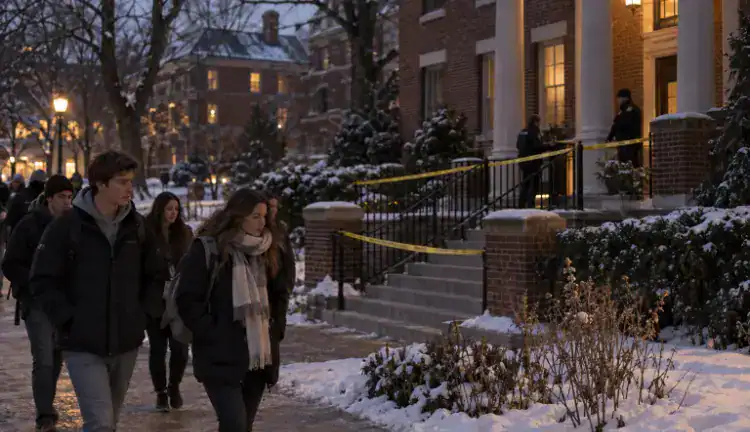
Pi Delta Psi, one of the country’s most popular Asian American fraternities, was formed nearly two decades ago around the ideals of the organization’s four pillars of character: academic achievement, cultural awareness, righteousness, and friendship/loyalty. None of those traits seemed to be on display earlier in December when the fraternity’s Baruch College chapter allegedly engaged 19-year-old freshman Chun Hsien Deng in a dangerous initiation “game” that rendered him unconscious, and then failed to bring him to the nearest hospital before an hour had passed, and Deng had lost all hope of survival.The game, called “Glass Ceiling,” involved having pledges like Deng carry backpacks filled with sand across a snowy yard, blindfolded, while fraternity brothers repeatedly tackled them. It is contended Deng was knocked unconscious by one of these impacts, and he remained unresponsive until he was declared dead at following day.The most disappointing fact about this story is how the fraternity brothers failed to seek medical attention for Deng immediately after his loss of consciousness. Instead they brought Deng inside, changed his clothes and ran Google searches for his symptoms. Even after decided that Deng needed more significant medical help than they could offer, the boys never called an ambulance for him. Rather they drove him toGeisinger Wyoming Valley Medical Center in a car, depriving him of yet more time in the care of trained professionals. When first confronted with the police, the brothers who accompanied Deng lied about his injuries, claiming that he had hit his head in a wrestling match.The only reasonable explanation for why these brothers would waste precious time seeking medical attention for a boy clearly suffering from major brain trauma is that they feared if the truth of their game was found out, they would be held liable for hazing.Hazing is an insidious crime particularly because it so often finds victims among impressionable freshman in college social groups such as fraternities. The law takes into account the peer pressure Deng must have felt when he agreed to partake in a game as dangerous as Glass Ceiling, by holding that the victim’s “consent to engage in a hazing activity is not a defense” against hazing.Fraternities and similar social organizations can be a greatly beneficial component of a college life. But they are still organizations run by students, and when they operate without constraint, and their own guidelines are forgotten, these groups can easily run amok. The tragedy of Chun Hsien Deng’s death is twofold: first, that before Deng’s head injury not one of the Pi Delta Psi brothers that were present stepped forward to put an end to this clearly dangerous game, and second, that after Deng was knocked unconscious, none of them feared for Deng’s survival more than they feared the consequences of being found responsible.
Related Practice Areas
Image note: photographs accompanying our blog articles are illustrative and digitally created. They do not depict actual clients, actual attorneys of this firm, or actual events.
Read more

Beyond the App: Unmasking Uber’s Strategy to Evade Passenger Liability
When a passenger steps into an Uber on the streets of New York, there is an implicit expectation that the multi-billion-dollar ride-hailing giant stands behind the safety of that journey. Yet, in courtrooms and arbitration proceedings across the country, Uber’s primary defense line remains remarkably consistent: we are merely a technology platform, not a transportation […]

When the Safety Net Fails: What Michael Wagner’s Story Teaches NYC Construction Workers About Labor Law 240(1) & Injury Rights
In the immediate aftermath of a severe construction site accident, most injured workers focus on one thing: getting back on their feet. They assume that if they play by the rules, report the incident, and file their claims, the safety net will be there to protect them and their families. Unfortunately, as millions of workers […]

Can New York City Be Liable for a Dangerous Street or Intersection?
When a pedestrian, bicyclist or motorist is seriously injured in a New York City traffic accident, the investigation should not always end with the drivers involved. In some cases, the design, operation or maintenance of the roadway itself may have contributed to the crash. New York City has a duty to maintain its streets in […]