
Why do Asian Americans Have Such a Hard Time Getting Into Harvard?
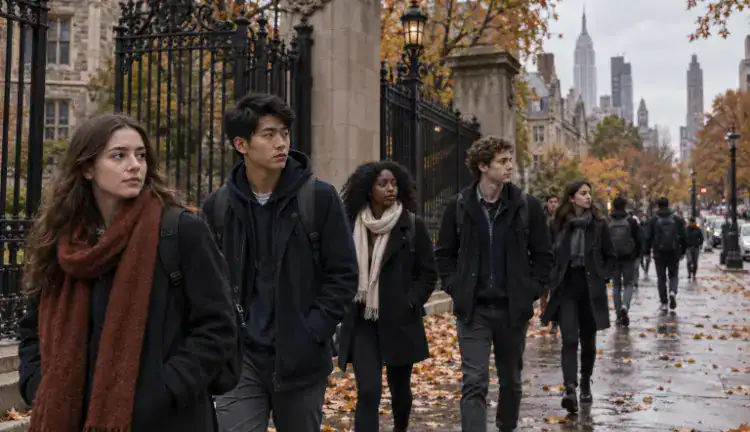
Each spring, Harvard University sends out rejection letters to roughly 94% of its applicants. The school’s astonishingly low acceptance rate (this year marked a record low at 5.3%) leaves many highly accomplished high school seniors at a loss at how to compete in an environment saturated with valedictorians and perfect SAT scores.
Like many top universities, Harvard claims to use a “holistic” approach to the admissions process that stresses diversity of backgrounds and experiences in addition to test scores. However, in the last two decades, a group of victims has emerged from this particular stress on diversity, and now they’re starting to fight back.
The Asian American population makes up the fastest growing ethnic group in the United States, and also the most academically competitive. Asian Americans constitute roughly a third of this year’s Presidential Scholars and National Merit semifinalists. So why doesn’t their presence at Harvard reflect that?
Harvard, like many other top private universities, has maintained the same ethnic ratios within its student body for decades, regardless of broader population shifts.
For reference, after California voted to ban considerations of gender and ethnicity from state school admissions, the state saw a skyrocketing of Asian American students at top state schools like Caltech and UC Berkeley. Between 1993 and 2015, Caltech’s Asian American student presence jumped from 26% to over 42%. In contrast, Harvard’s Asian American population has actually dropped from 21% to 20% since 1993.
A 2009 study by a Princeton sociologist found that Asian American students face a disadvantage in the admission process, having to earn on average 140 points higher on their SATs than their white peers to get into the same university. This study has been a talking point for many complaints filed against Harvard University in the last few years.
The Asian American disadvantage is not limited to the admissions process. A more recent study from the University of Pennsylvania found a strong bias against Asian Americans when researchers posed as students, writing identical letters to top professors asking for guidance. Taken together, these studies paint a bleak picture of the treatment of Asian Americans in academia.
There is nothing wrong with an admissions board interested in maintaining a diverse environment for incoming students. There is, however, something very wrong with a system that lumps together an American-born Japanese boy and a girl from India, and then caps their acceptance based on an ethnic diversity ratio set decades ago. A system like this misses the point of diversity entirely.
Sources: Bachelder, Kate, “Harvard’s Chinese Exclusion Act,” The Wall Street Journal, 5 June 2015.
Clark, Kim, “Do Elite Private Colleges Discriminate Against Asian Students?” U.S. News & World Report, 7 October 2009.
Cole, Nicki Lisa, “Study Finds Racial and Gender Bias in Professor Response to Students,” About Education.
Related Practice Areas
Image note: photographs accompanying our blog articles are illustrative and digitally created. They do not depict actual clients, actual attorneys of this firm, or actual events.
Read more

Beyond the App: Unmasking Uber’s Strategy to Evade Passenger Liability
When a passenger steps into an Uber on the streets of New York, there is an implicit expectation that the multi-billion-dollar ride-hailing giant stands behind the safety of that journey. Yet, in courtrooms and arbitration proceedings across the country, Uber’s primary defense line remains remarkably consistent: we are merely a technology platform, not a transportation […]

When the Safety Net Fails: What Michael Wagner’s Story Teaches NYC Construction Workers About Labor Law 240(1) & Injury Rights
In the immediate aftermath of a severe construction site accident, most injured workers focus on one thing: getting back on their feet. They assume that if they play by the rules, report the incident, and file their claims, the safety net will be there to protect them and their families. Unfortunately, as millions of workers […]

Can New York City Be Liable for a Dangerous Street or Intersection?
When a pedestrian, bicyclist or motorist is seriously injured in a New York City traffic accident, the investigation should not always end with the drivers involved. In some cases, the design, operation or maintenance of the roadway itself may have contributed to the crash. New York City has a duty to maintain its streets in […]