
Many Top NY Hospitals Breeding Grounds for Deadly Bacteria
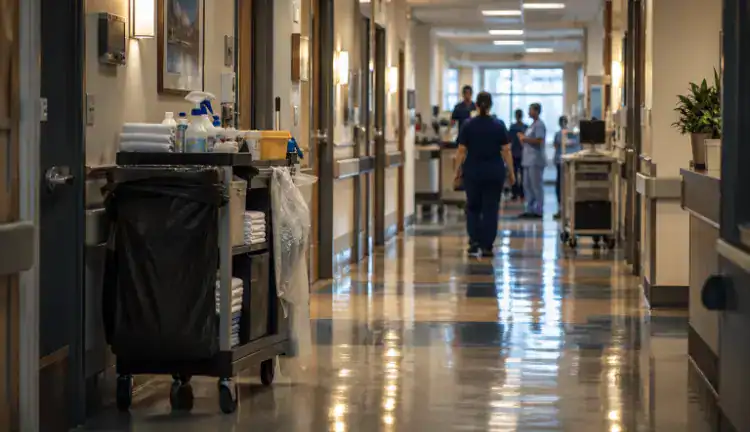
Every year, our office receives calls from potential clients that checked into hospitals for routine surgical procedures, and walked out with devastating bacterial infections. Some of these infections result in lost limbs. Others prove deadly. These cases are extremely difficult to prosecute because hospitals frequently use the defense that infections can spread any place that sick and elderly patients reside.
But are hospitals really doing everything can to prevent the spread of bacteria? Are all these infections unavoidable?
Of course not.
Alarming new data published by the Centers for Disease Control and Prevention shows that hospitals are breeding grounds for deadly bacteria, resulting in hundreds of thousands of infections annually. Roughly 1.7 million hospital patients will get an infection and 75,000 patients will die from healthcare-related infections this year–more than the deaths caused by both breast cancer or AIDS.
New York hospitals alone are responsible for 80,000 infections per year, and perform below average in infection prevention compared to other states, according to the New York State Department of Health.
Of the bacteria found in hospitals, MRSA, CRE and C. diff are some of the most common, and deadly, culprits. MRSA is the well-known infection that is resistant to most antibiotics. MRSA infections doubled from 1999 to 2005.
CRE is nicknamed a “nightmare bacteria” because it is highly resistant to antibiotics and kills up to half of those infected. There are approximately 1,600 CRE infections in New York hospitals every year.
C. diff. is the most widespread infection among New York hospitals, resulting in severe diarrhea and colon damage. It is spread when victims consume small amounts of the fecal matter of those infected, often due to unclean hospital equipment and facilities.
These infections are rampant in hospitals not because staff is ignorant to how they are contracted, but rather because hospital staff repeatedly fail to take the necessary precautions to maintain a sterile environment, according to research published in Critical Care Medicine. Rigorous cleaning is the solution to the spread of C. diff infections. The Mayo Clinic reduced its cases by 85 percent simply by cleaning surfaces around patients’ beds once a day with bleach wipes.
In July, Consumer Reports began rating hospitals based on infection risks, and revealed some surprising results. Very few hospitals across the country received strong scores in infection prevention, and some of New York’s top hospitals, such as NYU Langone and New York Presbyterian, received only average results. Memorial-Sloan Kettering, Long Island Jewish, St. Barnabas and Buffalo General were among the worst-rated hospitals for C. diff infections.
Hospitals can reduce their risks of infection by paying more attention to cleanliness, and avoiding broad-spectrum antibiotics when possible. Scaling back broad-spectrum prescriptions by a third would “cut hospital rates of C. diff by more than 25 percent, plus reduce antibiotic resistance,” according to CDC epidemiologist Clifford McDonald, M.D.
Patients can also take on a stronger role as advocates for their own safety. “Infection control is all about the basics, starting with hand hygiene,” says Christine Candio, president and CEO of St. Luke’s Hospital in Chesterfield, Mo., one of the higher scoring hospitals in infection prevention. If you feel that hospital staff could be taking greater precautions with your health and hygiene, “it’s your right to ask.”
Sources: “Despite Progress, Ongoing Efforts Needed to Combat Infections Impacting Hospital Patients,” Centers for Disease Control and Prevention, 26 March 2014.
“Healthcare-Associated Infections (HAIs),” Centers for Disease Control and Prevention, 12 January 2015.
“How Your Hospital Can Make You Sick,” Consumer Reports, 29 July 2015.
McCaughy, Betsy, “The Killers That Even Top Hospitals Just Wink At,” New York Post, 26 August 2015.
Related Practice Areas
Image note: photographs accompanying our blog articles are illustrative and digitally created. They do not depict actual clients, actual attorneys of this firm, or actual events.
Read more

Beyond the App: Unmasking Uber’s Strategy to Evade Passenger Liability
When a passenger steps into an Uber on the streets of New York, there is an implicit expectation that the multi-billion-dollar ride-hailing giant stands behind the safety of that journey. Yet, in courtrooms and arbitration proceedings across the country, Uber’s primary defense line remains remarkably consistent: we are merely a technology platform, not a transportation […]

When the Safety Net Fails: What Michael Wagner’s Story Teaches NYC Construction Workers About Labor Law 240(1) & Injury Rights
In the immediate aftermath of a severe construction site accident, most injured workers focus on one thing: getting back on their feet. They assume that if they play by the rules, report the incident, and file their claims, the safety net will be there to protect them and their families. Unfortunately, as millions of workers […]

Can New York City Be Liable for a Dangerous Street or Intersection?
When a pedestrian, bicyclist or motorist is seriously injured in a New York City traffic accident, the investigation should not always end with the drivers involved. In some cases, the design, operation or maintenance of the roadway itself may have contributed to the crash. New York City has a duty to maintain its streets in […]