
Asiana Airlines Crash Killed Two Chinese Students and Injured Dozens More
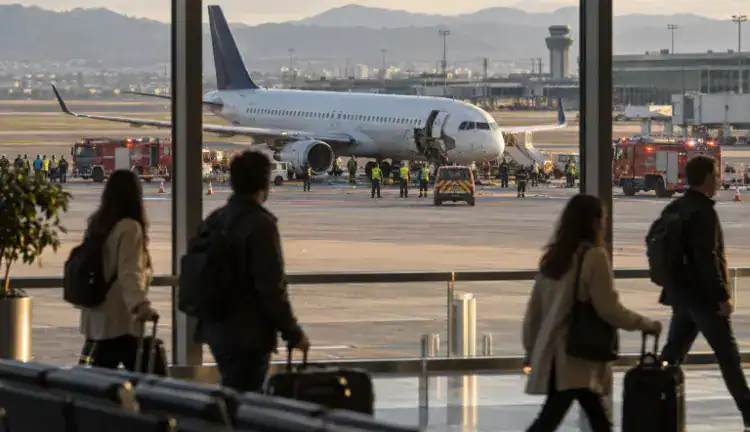
The U.S. National Transportation Safety Board is looking for answers in the aftermath of the Asiana Airlines Boeing 777 crash on July 6th, which killed Ye Mengyuan and Wang Linjia, two 16-year-old Chinese students and gravely injured many more. The aircraft was carrying 291 passengers and 16 crewmembers from Seoul to San Francisco when its tail crashed into a seawall positioned just before the runway in the San Francisco Bay.This incident marks the first Boeing 777 crash in the aircraft’s history, dating back to 1995. Though Asiana Airlines has released a statement that they do not believe the accident to be a result of any mechanical failure with the plane, the NTSB is holding off from pointing fingers until a full investigation has been conducted. In the hours since the crash there have been speculation as to whether the pilot error or runway construction might be at fault.What is presently known is that the aircraft was traveling at “significantly” slower than target speed while approaching the runway, according to a NTSB report, and that there was a stall warning 4 seconds before the aircraft’s impact. 1.5 seconds before the impact the crew attempted to pull away from the runway, lifting the nose of the aircraft right before its tail crashed into the seawall.Autopsies are underway to determine the cause of Ms. Ye and Ms. Wang’s deaths. One of the girls is believed to have been ejected from the aircraft upon impact, and there is some evidence that she was then run over by an emergency vehicle rushing to the scene of the crash.Other passengers suffered head trauma and spinal fractures in addition to other injuries. It is estimated that over 180 passengers have sustained injuries from the crash.Our deepest sympathy goes out to these passengers and their families. We will continue to cover this story as more information is released, and we hope the NTSB conducts a thorough investigation that may yield information about the reasons for the crash and how tragedies like these can be avoided in the future.Source: Chicago Tribune, “Pilot of Crashed Asiana Plane was ‘In Training’ to Fly Boeing 777,” July 7, 2013.
Related Practice Areas
Image note: photographs accompanying our blog articles are illustrative and digitally created. They do not depict actual clients, actual attorneys of this firm, or actual events.
Read more

Beyond the App: Unmasking Uber’s Strategy to Evade Passenger Liability
When a passenger steps into an Uber on the streets of New York, there is an implicit expectation that the multi-billion-dollar ride-hailing giant stands behind the safety of that journey. Yet, in courtrooms and arbitration proceedings across the country, Uber’s primary defense line remains remarkably consistent: we are merely a technology platform, not a transportation […]

When the Safety Net Fails: What Michael Wagner’s Story Teaches NYC Construction Workers About Labor Law 240(1) & Injury Rights
In the immediate aftermath of a severe construction site accident, most injured workers focus on one thing: getting back on their feet. They assume that if they play by the rules, report the incident, and file their claims, the safety net will be there to protect them and their families. Unfortunately, as millions of workers […]

Can New York City Be Liable for a Dangerous Street or Intersection?
When a pedestrian, bicyclist or motorist is seriously injured in a New York City traffic accident, the investigation should not always end with the drivers involved. In some cases, the design, operation or maintenance of the roadway itself may have contributed to the crash. New York City has a duty to maintain its streets in […]