
Big Rig Collisions Causing More Suffering Than Necessary, And How We Can Fix It
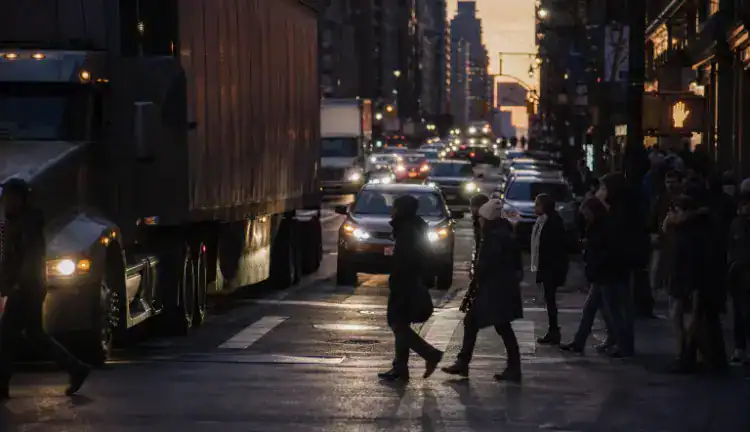
A collision between a personal vehicle and a big rig can be devastating. Those involved may experience injury or death, while their loved ones are tasked with caring for them (if they’re lucky), or making arrangements for a memorial service (if they’re not). Under such tragic circumstances, the victims and their families should be provided with fair and adequate compensation to aid with their expenses. However, many commercial trucks carry the absolute minimum amount of insurance coverage— and typically, that’s not nearly enough.
The federal minimum for liability insurance for truckers is $750,000. Although that may sound like a lot of money, the damage that tractor trailers inflict in a collision often dwarfs this minimal sum. Congress set the minimum at $750,000 back in 1985, and has not been changed it since. It has not even been adjusted for inflation. If it were, the minimum would now be $2.2 million. Needless to say, the victims of collisions caused by negligent truck drivers are increasingly finding themselves fighting for compensation that is woefully insufficient to cover their medical bills.
Graham Brown is one such victim. In 2005, his car was struck by a big-rig manned by a drowsy driver, and his car flew off the road into a field. His injuries were extensive: he suffered collapsed lungs, broken arms and legs, neurological damage, and kidney failure. Brown had to be airlifted to the hospital for a six-hour surgery that saved his life, and has since undergone more than 20 additional operations.
Though the settlement Brown and his family reached with the trucking company granted them $1 million, after paying attorney fees, initial medical expenses and case costs, they recovered about $300,000. That may not even cover the amount Brown’s parents already paid out of their retirement savings to help with earlier medical bills and their lost wages for the time they spent caring for their son, much less the medical care Brown will require for the rest of his life.
Worse yet, accidents are on the rise. Americans drove less in the wake of the economic crash in 2008, however, according to attorney Hilary Rowen, who specializes in insurance, “in the last few years, mileage has increased to record heights. The more miles cars travel, the more accidents they have, all other things being equal.”
Whether due to long hours, distraction while driving, or being forced to make deliveries at an unsustainable pace, truck drivers are frequently the cause of deadly collisions. While experience and training can help improve their driving skills, Rowen maintains that the sheer number of hours truck drivers spend on the road means the trend will continue. And, unless something is done to raise the insurance minimum, the victims will continue to suffer not only from their injuries, but from severe financial hardship as well.
During the Obama administration, the Federal Motor Carrier Safety Administration, or FMCSA, the branch of the Department of Transportation that regulates interstate trucking, announced that it would consider raising the minimum insurance for truckers. However, the agency ultimately failed to take action. Now, with the Trump administration making moves to deregulate wherever it can, the FMCSA announced it would withdraw that proposal. The administration stated it could not find sufficient “information to support moving forward.” Unfortunately, this means victims of collisions involving trucks will continue to suffer far more than necessary.
Sources
Feldman, Paul. “Truckers Win Fight to Keep Insurance Payouts Low.” NBC News 13 July 2017.
Milne-Tyte, Ashley. “Traffic Climbed After the Recession. So Did Accidents and Truckers’ Premiums.” Marketplace 6 July 2017.
“Truck’s Insufficient Insurance Coverage Leaves American Family Struggling,” Take Justice Back.
Related Practice Areas
Image note: photographs accompanying our blog articles are illustrative and digitally created. They do not depict actual clients, actual attorneys of this firm, or actual events.
Read more

Beyond the App: Unmasking Uber’s Strategy to Evade Passenger Liability
When a passenger steps into an Uber on the streets of New York, there is an implicit expectation that the multi-billion-dollar ride-hailing giant stands behind the safety of that journey. Yet, in courtrooms and arbitration proceedings across the country, Uber’s primary defense line remains remarkably consistent: we are merely a technology platform, not a transportation […]

When the Safety Net Fails: What Michael Wagner’s Story Teaches NYC Construction Workers About Labor Law 240(1) & Injury Rights
In the immediate aftermath of a severe construction site accident, most injured workers focus on one thing: getting back on their feet. They assume that if they play by the rules, report the incident, and file their claims, the safety net will be there to protect them and their families. Unfortunately, as millions of workers […]

Can New York City Be Liable for a Dangerous Street or Intersection?
When a pedestrian, bicyclist or motorist is seriously injured in a New York City traffic accident, the investigation should not always end with the drivers involved. In some cases, the design, operation or maintenance of the roadway itself may have contributed to the crash. New York City has a duty to maintain its streets in […]