
Car Insurance Claims Are Being Denied at an Alarming Rate. Here’s What You Can Do to Protect Yourself
Nearly half of auto liability and medical claims are now closed without payment. Why insurers deny claims, and what accident victims can do about it.
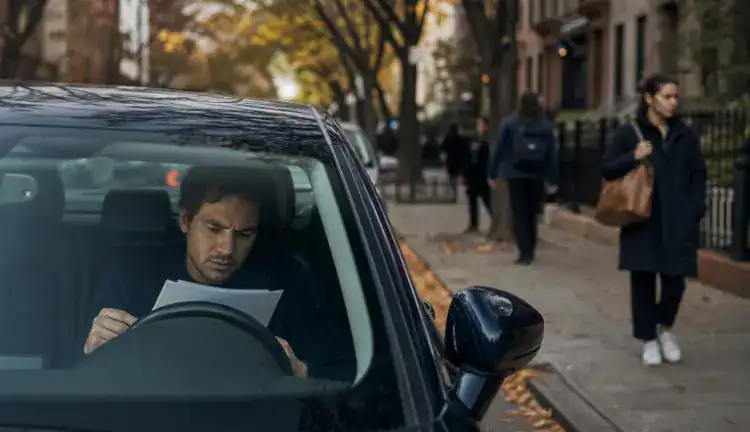
Most people assume that if they are injured in a car accident, insurance will be there to pay legitimate claims. After all, drivers are required to carry insurance precisely to protect themselves and others when an accident occurs.
But a recent Wall Street Journal investigation reveals a troubling reality: insurance companies are closing an increasing percentage of automobile liability and medical claims without paying anything at all.
According to the Journal’s analysis of regulatory filings, 45% of auto liability and medical claims resolved in 2025 were closed without payment. A decade earlier, that figure was approximately 35%.
In other words, nearly one out of every two resolved liability and medical claims is now being closed without an insurance payment.
For accident victims, the message is clear: having an insurance policy does not guarantee that an insurance company will voluntarily pay a claim.
Some of the Nation’s Largest Insurers Are Paying Fewer Claims
The Journal’s analysis shows substantial increases in the percentage of liability and medical claims closed without payment by several major insurers.
Between 2016 and 2025, Liberty Mutual’s rate reportedly increased from 29% to 54%, State Farm’s from 26% to 47%, Farmers’ from 19% to 39%, and Progressive’s from 35% to 46%. Across the industry, the rate increased from approximately 35% to 45%.
The Journal found that among the ten largest automobile insurers, Farmers, Liberty Mutual and State Farm experienced the largest increases in no-payment rates for liability and medical claims over the past decade.
These statistics do not mean that every claim closed without payment was improperly denied. Some claims may be withdrawn, paid by another carrier, fall outside the policy, or involve damages below a deductible.
Nevertheless, the overall trend should concern anyone who expects an insurance company to fairly compensate them after a serious accident.
Why Are Insurance Companies Fighting More Claims?
Insurance companies offer several explanations.
The industry points to increasing insurance fraud, including fraudulent claims involving artificial intelligence, as well as increased litigation and attorney involvement. Plaintiff attorneys and consumer advocates see the situation very differently. They argue that litigation is increasing because insurance companies are denying more claims and making them more difficult to resolve.
There is also a significant financial incentive to control claim payments. The Journal reports that personal auto insurers paid approximately 61 cents in claims for every dollar collected in premiums in 2025, their lowest net loss ratio since 2020.
Whatever the explanation, injured people need to understand an important fact: the insurance company’s interests and your interests are not necessarily the same.
The adjuster may sound helpful and cooperative, but the insurance company’s job is to investigate the claim, determine whether it can limit or deny coverage, evaluate potential defenses and control how much it ultimately pays.
A Claim Can Be Jeopardized by Something That Seems Completely Unrelated to the Accident
One example discussed by the Journal demonstrates how technical insurance issues can become extremely important after an accident.
A California driver was involved in what he described as a minor bumper accident. His insurer, National General, which is owned by Allstate, refused to pay the claim because the insured had not disclosed his 15-year-old son as a household member on the insurance application.
The teenager wasn’t driving the vehicle, wasn’t involved in the accident and didn’t even have a driver’s license. Nevertheless, the insurer relied upon the failure to disclose him as a basis for refusing payment. A class action subsequently alleged that the application process discouraged the required disclosures. National General has denied wrongdoing.
State Farm has also reportedly tightened its rules concerning undisclosed drivers. According to the Journal, State Farm changed renewal policy language to require policyholders to notify the company about changes such as new regular drivers. An internal company memo reportedly stated that claims involving undisclosed drivers cost the insurer nearly $1.5 billion annually and described circumstances in which claims previously paid could potentially be denied under the new language.
The lesson is important: insurance companies may examine far more than simply who caused the accident.
They may scrutinize the policy application, household members, regular vehicle users, policy exclusions, coverage conditions and statements made by the insured after the accident.
What Should You Do After a Car Accident?
There are several steps accident victims can take to protect themselves.
- Document the accident immediately. If you are physically able, photograph the vehicles, damage, roadway, traffic signals, signs, skid marks and surrounding area. Obtain the names and contact information of witnesses and make sure the police are called when appropriate.
- Seek prompt medical attention. If you are injured, do not delay treatment simply because you hope the pain will disappear. Delays can create both medical problems and insurance disputes about whether an injury was actually caused by the accident.
- Be careful when speaking with an insurance company. An adjuster’s request for a recorded statement may sound routine, but what you say can later become evidence concerning liability, injuries or coverage. Do not guess about facts you do not remember.
- Preserve documents and communications. Keep your insurance policy, declarations page, photographs, police paperwork, medical records, correspondence, emails and text messages relating to the accident. Save communications from insurers rather than relying on telephone conversations alone.
- Make sure your insurance application remains accurate. If someone in your household begins regularly driving your vehicle, a teenager obtains a license, you change where the vehicle is principally kept, or another significant fact changes, contact your broker or carrier and determine whether the policy needs to be updated.
- Do not assume a denial is the final word. Insurance companies can dispute coverage, liability, causation and damages. A denial letter represents the insurer’s position. It does not necessarily determine your legal rights.
- Speak with an experienced personal injury attorney early. Serious accidents can involve multiple insurance policies, deadlines, surveillance footage, vehicle data, witnesses and evidence that can disappear quickly. Early investigation can make a substantial difference.
If Your Claim Is Denied, Ask Why, in Writing
If an insurance company tells you that it will not pay a claim, request a written explanation identifying the precise reason for the denial and the policy provision upon which the company relies.
A denial may raise important questions:
- Was the exclusion actually part of the policy?
- Does the exclusion apply to these particular facts?
- Was the insurer properly notified?
- Is another insurance policy available?
- Is there uninsured or underinsured motorist coverage?
- Has the insurer accurately interpreted the policy?
Those questions can have very different answers depending upon the circumstances.
Don’t Let the Insurance Company Control the Investigation
After a serious accident, insurance companies frequently begin investigating immediately. They can obtain statements, inspect vehicles, photograph accident scenes and evaluate potential defenses long before an injured person understands the significance of what occurred.
Accident victims should be equally proactive.
Evidence should be preserved. Witnesses should be located. Available insurance coverage should be identified. Medical injuries should be documented. And when an insurance company refuses to pay a legitimate claim, the basis for that refusal should be carefully examined.
The Journal’s findings provide an important warning: insurance coverage may be mandatory, but payment of a claim is far from automatic.
If you or a family member has been seriously injured in an automobile accident, obtaining legal advice early can help protect your rights before critical evidence disappears or an insurance company makes decisions that affect your ability to recover compensation.
Source: The Wall Street Journal, “If You Get in a Car Crash, the Risk Is Growing Your Insurance Won’t Pay”. All figures and company statements cited above are as reported by the Journal.
This article is for informational purposes only and does not constitute legal advice. Every accident and insurance policy presents different facts and legal issues.
Related Practice Areas
Image note: photographs accompanying our blog articles are illustrative and digitally created. They do not depict actual clients, actual attorneys of this firm, or actual events.
Read more

Beyond the App: Unmasking Uber’s Strategy to Evade Passenger Liability
When a passenger steps into an Uber on the streets of New York, there is an implicit expectation that the multi-billion-dollar ride-hailing giant stands behind the safety of that journey. Yet, in courtrooms and arbitration proceedings across the country, Uber’s primary defense line remains remarkably consistent: we are merely a technology platform, not a transportation […]

When the Safety Net Fails: What Michael Wagner’s Story Teaches NYC Construction Workers About Labor Law 240(1) & Injury Rights
In the immediate aftermath of a severe construction site accident, most injured workers focus on one thing: getting back on their feet. They assume that if they play by the rules, report the incident, and file their claims, the safety net will be there to protect them and their families. Unfortunately, as millions of workers […]

Can New York City Be Liable for a Dangerous Street or Intersection?
When a pedestrian, bicyclist or motorist is seriously injured in a New York City traffic accident, the investigation should not always end with the drivers involved. In some cases, the design, operation or maintenance of the roadway itself may have contributed to the crash. New York City has a duty to maintain its streets in […]