
Contaminated Peanuts Killed 9, Executive Given Harshest Sentence in History
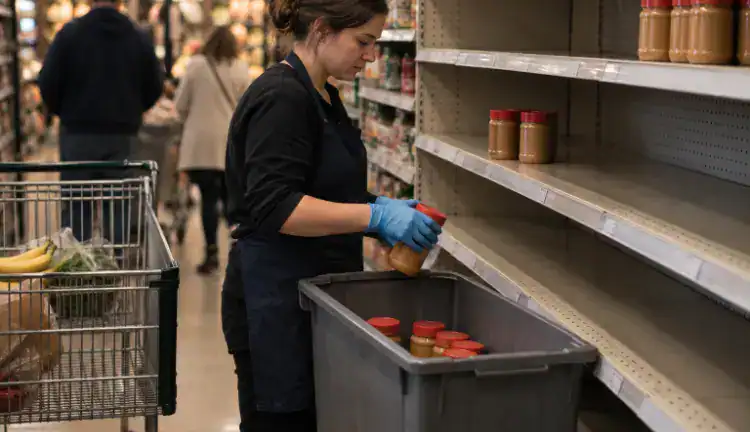
For over 30 years, the Peanut Corporation of America (PCA) marketed itself as “the Processor of the World’s Finest Peanut Products.” However, a salmonella outbreak at the peanut plant in 2008 and 2009 infected 714 people across the United States, killing 9.
PCA boasted of its “remarkable food-safety record,” and yet investigators say the company’s internal tests yielded positive results for salmonella 6 times between 2007 and 2008. In spite of this, PCA continued to sell their peanuts in the form of cookies, cereal, crackers, ice cream, and dog treats.
The Food and Drug Administration documented the appearance of roaches, mold, unsanitary equipment and the failure to separate cooked and uncooked products at the PCA’s Georgia plant.
These conditions resulted in one of the largest-scale recalls in US history, which also affected companies like Kellogg’s that had purchased PCA products. After numerous lawsuits were launched against PCA by salmonella victims and their families, the company declared bankruptcy in 2009.
Last year, PCA president and CEO Stewart Parnell was convicted of over 70 criminal offenses, including conspiracy, obstruction of justice, and shipping tainted food across state lines.
Leading up to Mr. Parnell’s sentencing on Monday, his family begged the court for mercy. His daughter described him as a special man, with a heart to put others before himself. “Please show my father mercy when considering his sentencing,” requested Mr. Parnell’s son.
His victims, however, were given little reason to forgive the peanut CEO. Court documents revealed that when faced with a shipment delay pending a salmonella test, Mr. Parnell wrote, “S-–, just ship it. I can’t afford to loose [sic] another customer.”
When called to testify before Congress, Mr. Parnell invoked his 5th amendment right to remain silent. Throughout the trial he maintained that he was not aware of his company’s fraud, despite evidence to the contrary.
“I really struggled with trying to forgive this guy, because he claims no responsibility whatsoever. . . . We’ve gone past the point of forgiveness,” said Jeff Palmer, whose mother died from one of PCA’s products.
Mr. Parnell was given a 28-year prison sentence Monday, which is the harshest sentence to date for an executive in a food poisoning outbreak. His brother, food broker Michael Parnell, received a 20-year sentence. The plant’s quality assurance manager, Mary Wilkerson, was sentenced to 5 years.
According to the Food and Drug Administration, roughly 48 million people contract food-borne illnesses every year. 3,000 of these cases become deadly.
Food safety is a serious issue in this country, and it is our hope that Mr. Parnell’s sentencing sends a strong message to other executives in his position. The first step towards a safer food industry was taken in 2011, in the wake of the PCA salmonella outbreak, when President Obama signed the Food Safety Modernization Act into law. The FSMA aims to prevent future food contamination, and has been described by the FDA as “the most sweeping reform of our food safety laws in more than 70 years.”
Sources: Basu, Moni, “28 Years for Salmonella: Peanut Exec Gets Groundbreaking Sentence,” CNN, 22 September 2015.
Dennis, Brady, “Executive Who Shipped Tainted Peanuts Gets 28 Years; 9 Died of Salmonella,” The Washington Post, 21 September 2015.
Related Practice Areas
Image note: photographs accompanying our blog articles are illustrative and digitally created. They do not depict actual clients, actual attorneys of this firm, or actual events.
Read more

Beyond the App: Unmasking Uber’s Strategy to Evade Passenger Liability
When a passenger steps into an Uber on the streets of New York, there is an implicit expectation that the multi-billion-dollar ride-hailing giant stands behind the safety of that journey. Yet, in courtrooms and arbitration proceedings across the country, Uber’s primary defense line remains remarkably consistent: we are merely a technology platform, not a transportation […]

When the Safety Net Fails: What Michael Wagner’s Story Teaches NYC Construction Workers About Labor Law 240(1) & Injury Rights
In the immediate aftermath of a severe construction site accident, most injured workers focus on one thing: getting back on their feet. They assume that if they play by the rules, report the incident, and file their claims, the safety net will be there to protect them and their families. Unfortunately, as millions of workers […]

Can New York City Be Liable for a Dangerous Street or Intersection?
When a pedestrian, bicyclist or motorist is seriously injured in a New York City traffic accident, the investigation should not always end with the drivers involved. In some cases, the design, operation or maintenance of the roadway itself may have contributed to the crash. New York City has a duty to maintain its streets in […]