
Why Did Fiat Wait Until Anton Yelchin’s Death to Start Fixing Its Cars?
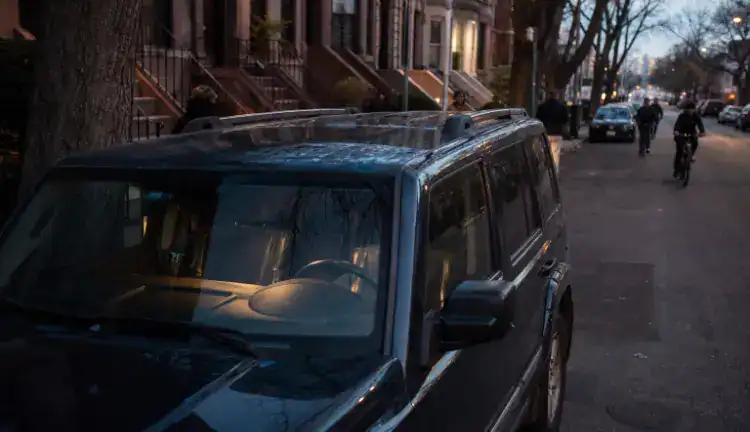
Star Trek actor Anton Yelchin was killed on June 19th, crushed by his own 2015 Jeep Grand Cherokee after it rolled backwards down his steep driveway. Mr. Yelchin was just 27 years old.
Recent Jeep Grand Cherokee models as well as Dodge Chargers and Chrysler 300s sedans—all owned by Fiat Chrysler Automobiles—have a history of rollaway incidents. The problem was first officially recognized in August 2015, when the National Highway Traffic Safety Administration (NHTSA) initiated a preliminary evaluation of the gear shifter design flaw that has been confusing drivers and causing accidents.
Fiat developed a software fix that would remedy the design flaw, but the company did not intend to implement the changes until the fourth quarter of 2016. Though NHTSA has only conceded that Mr. Yelchin’s death “may have been related to the alleged defect,” Fiat announced shortly after the incident that they would begin fixing its vehicles immediately.
Why did it take so long?
In February, NHTSA expanded its preliminary evaluation of Fiat, launching an Engineering Analysis investigation into the German-made Monostable gear shifters that were present in all of the rollaway cases. At that point, NHTSA and Fiat had received more than 300 separate consumer complaints about the gear shifters. Over 30 drivers had sustained injuries from rollaway vehicles, including fractured kneecaps and pelvises, ruptured bladders, and broken ribs.
According to NHTSA, the Monostable gear shifter is “not intuitive and provides poor tactile and visual feedback to the driver, increasing the potential for unintended gear selection.” In many cases, drivers believed that they had shifted their vehicles into park, when in fact the gear shifters remained in the drive, neutral or reverse positions.
Once complainant described, “when I put the car into park, it pops into reverse. Then I hit the engine off button, but since it is in reverse, the engine stays on. Then I open the door to get out, thinking the engine is off and the car is in park, and it starts rolling backward. This has happened 6 times.”
By the end of last month, the number of complaints about the Monostable gear shifter had surged to 686. There were 68 reported injuries and 266 reported crashes tied to the faulty design. As of April, 1.1 million Fiat vehicles had been recalled, and all 2016 Fiat models were built without the Monostable.
Yet before Mr. Yelchin’s death, Fiat had no intention of installing the software fix before the fourth quarter.
“There was no sense of urgency on Fiat Chrysler’s part or NHTSA’s part given the potential for death or injury,” said Clarence Ditlow, the executive director of consumer advocacy group Center for Auto Safety.
Safety recalls are common in the auto industry. Defects and design flaws are an unfortunate fact of life. But when a mistake like the Monostable gear shifter is discovered, and neither NHTSA nor the auto manufacturer does anything to provide a timely fix, then the accidents and the injuries that follow are on their hands.
A celebrity should not have had to die before Fiat decided to repair their faulty vehicles.
Sources: “Chrysler’s Shifty Shifter and the Wacky World of Defects,” Safety Research & Strategies, Inc., 12 February 2016.
Jensen, Christopher, “Anton Yelchin’s Death Highlights a Known Issue With Jeeps,” The New York Times, 21 June 2016.
Woodall, Bernie, “Fiat Chrysler Rollaway Recall Linked to 68 Injuries,” Claims Journal, 29 June 2016.
Woodall, Bernie, “Vehicles in Fiat Chrysler rollaway recall linked to 68 injuries,” Reuters, 28 June 2016.
Related Practice Areas
Image note: photographs accompanying our blog articles are illustrative and digitally created. They do not depict actual clients, actual attorneys of this firm, or actual events.
Read more

Beyond the App: Unmasking Uber’s Strategy to Evade Passenger Liability
When a passenger steps into an Uber on the streets of New York, there is an implicit expectation that the multi-billion-dollar ride-hailing giant stands behind the safety of that journey. Yet, in courtrooms and arbitration proceedings across the country, Uber’s primary defense line remains remarkably consistent: we are merely a technology platform, not a transportation […]

When the Safety Net Fails: What Michael Wagner’s Story Teaches NYC Construction Workers About Labor Law 240(1) & Injury Rights
In the immediate aftermath of a severe construction site accident, most injured workers focus on one thing: getting back on their feet. They assume that if they play by the rules, report the incident, and file their claims, the safety net will be there to protect them and their families. Unfortunately, as millions of workers […]

Can New York City Be Liable for a Dangerous Street or Intersection?
When a pedestrian, bicyclist or motorist is seriously injured in a New York City traffic accident, the investigation should not always end with the drivers involved. In some cases, the design, operation or maintenance of the roadway itself may have contributed to the crash. New York City has a duty to maintain its streets in […]