
Hospitals Transmitting Antibiotic-Resistant Superbug. Thousands Dead.
If you only read Sharley McMullen’s death certificate, you would think she passed away as the result of respiratory failure and septic shock. The truth is much more alarming.
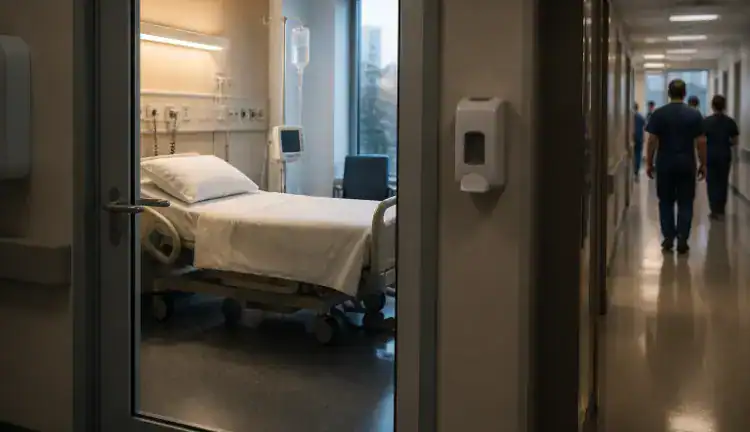
McMullen, a healthy 72-year old woman from California, was finishing up treatment for a benign stomach ulcer when she contracted an infectious bacterial disease in the hospital where she was being treated. Five weeks later, she was dead. In a morbid twist of fate, the hospital that was supposed to heal her caused her death.
McMullen’s doctor, Yasmeen Shaw, chose not to list Carbapenem-Resistant Klebsiella Pneumoniae (CRKP), the infectious disease, as the official cause of death because Shaw reasoned that had McMullen “not have had a perforated ulcer… [she] wouldn’t have been in the hospital in the first place.”
Doctor Shaw is correct that McMullen would not have died had she not sought medical treatment for her ulcer, and this precisely what is so troubling. Patients should not suffer from a fatal infection when they go to the hospital with a treatable disease.
Unfortunately, federal health officials now consider CRKP, and a whole host of other “superbugs” that are commonly transmitted at hospitals, as one of the nation’s most immediate health threats. Because the pathogens are no longer treatable by carbapenems, the “antibiotic of last resort,” they result in a 35% death rate.
These superbugs are widespread as well; the Center for Disease Control estimates that 1.7 million people acquire infections in hospitals every year, which cause or contribute to 99,000 deaths per year. This makes hospital-acquired infections one of the top-ten leading causes of death in the United States.
You would never know that, though, if you only looked at National Vital Statistics Report. Hospitals across the United States try to cover up the problem of the hospital transmitted infections by putting misleading causes of death in patient’s death certificates. In fact, a 2010 survey published by the Center for Disease Control showed that 49% of New York City medical residents said they had knowingly reported an inaccurate cause of death on a certificate.
Why are hospitals misrepresenting the facts? They are afraid of being sued, and if they admit that they contributed to a patient’s death, they may be held liable.
This is appalling for multiple reasons. For one, families may never know the real reason their loved one passed away – information they deserve to know. Moreover, if a death is caused by wrongdoing or negligence, families should be able to hold the hospitals accountable for their loss. Finally, if a problem is not acknowledged – in this case, dangerous pathogens – it cannot be properly addressed. This may explain why hospital acquired infections still cause so many deaths each year.
Certain states have taken small steps towards improving their response. New York, for example, was one the first states to mandate that all general hospitals “maintain a program capable of identifying and tracking hospital acquired infections” in 2005. This was a significant advancement in the process of eliminating hospital-acquired infections.
Still, as we know the danger that diseases like CRKP pose to public safety, it is clear that more needs to be done. The first step you can take is by staying with your loved ones when they are in the hospital, and to speak up if something seems wrong or unsanitary. As the Director of the Center for Disease Control said, “No one should get sick while trying to get well.”
References:
Melnick, Meredith “Q&A With a Superbug Expert: How Dangerous Is CRKP?” TIME, 30 March 2011.
“New York Public Health Law 2819. Hospital Acquired Infection Reporting,” FindLaw.
Nuñez, Daniela “Beware of Scary Superbugs in Your Hospital,” Consumers Union, 21 October 2016.
Schwaber, Mitchell and Carmeli, Yehuda “Carbapenem-Resistant EnterobacteriaceaeA Potential Threat,” The JAMA Network, 24 December 2008
“Superbugs Threaten Hospital Patients” Center for Disease Control and Prevention, 3 March 2016.
Related Practice Areas
Image note: photographs accompanying our blog articles are illustrative and digitally created. They do not depict actual clients, actual attorneys of this firm, or actual events.
Read more

Beyond the App: Unmasking Uber’s Strategy to Evade Passenger Liability
When a passenger steps into an Uber on the streets of New York, there is an implicit expectation that the multi-billion-dollar ride-hailing giant stands behind the safety of that journey. Yet, in courtrooms and arbitration proceedings across the country, Uber’s primary defense line remains remarkably consistent: we are merely a technology platform, not a transportation […]

When the Safety Net Fails: What Michael Wagner’s Story Teaches NYC Construction Workers About Labor Law 240(1) & Injury Rights
In the immediate aftermath of a severe construction site accident, most injured workers focus on one thing: getting back on their feet. They assume that if they play by the rules, report the incident, and file their claims, the safety net will be there to protect them and their families. Unfortunately, as millions of workers […]

Can New York City Be Liable for a Dangerous Street or Intersection?
When a pedestrian, bicyclist or motorist is seriously injured in a New York City traffic accident, the investigation should not always end with the drivers involved. In some cases, the design, operation or maintenance of the roadway itself may have contributed to the crash. New York City has a duty to maintain its streets in […]