
Struck as a Pedestrian in New York City: Who Pays and What the Right of Way Rules Say
Pedestrian right of way in New York is narrower than the slogan suggests, and it does not decide who pays your first medical bills. Vehicle and Traffic Law section 1151 covers crosswalks only where signals are missing or not working, while section 1146 requires due care from every driver. No-fault pays first, too much pedestrian fault now ends a vehicle claim, and the deadlines and evidence that matter most arrive in the first month.
The pedestrian right of way in New York crosswalks applies only where signals are missing or dark
Under Vehicle and Traffic Law section 1151(a), a driver must yield to a pedestrian in a crosswalk when traffic-control signals are not in place or not in operation. Many guides drop that qualifier. New York City had 13,543 intersections with traffic signals as of March 2022, according to NYC DOT. Section 1151(a) does not govern those crossings when the signals work, and section 1146 still does.
The rest of section 1151 adds three rules.
- Where a pedestrian tunnel or overpass has been provided, a pedestrian crossing the roadway there must yield to all vehicles.
- Under section 1151(b), a pedestrian may not suddenly leave a curb into the path of a vehicle too close to yield. Insurers rely on this clause when they say you came out of nowhere.
- Under section 1151(c), a driver may not pass a vehicle stopped at a crosswalk to let a pedestrian cross.
The crosswalk rule decides whether the driver broke it, not whether your bills get paid.
Every driver owes you due care under Section 1146, crosswalk or not
Vehicle and Traffic Law section 1146 requires every driver to exercise due care to avoid colliding with any pedestrian. That duty covers the places section 1151 never reaches, such as a signalized corner or the middle of a block. The right of way can shift, but the duty stays with the driver.
A Right of Way Law charge punishes the driver and pays you nothing
What is the Right of Way Law? New York City Administrative Code section 19-190 makes it an offense for a driver to fail to yield to a pedestrian with the right of way. The basic violation is a traffic infraction. When the vehicle makes contact and causes physical injury, the charge can be a misdemeanor.
Does a 19-190 charge get my bills paid? No. Section 19-190 is a criminal law, not a source of compensation. Payment comes through no-fault benefits and a civil claim. Whether the driver is charged is up to police and prosecutors. The thirty-day no-fault notice is in your hands.
Can a pedestrian be at fault in New York? Yes, and since May 26, 2026 too much fault ends the claim
Under CPLR 1411(a), your own culpable conduct does not bar recovery, and damages are reduced in proportion to your share. Part EE of Chapter 58 of the Laws of 2026 added CPLR 1411(b). In a personal injury action subject to Article 51 of the Insurance Law, which includes pedestrians struck by a vehicle, your conduct bars recovery if it is greater than the fault of the person sued, or of everyone sued combined. The change applies to actions commenced on or after May 26, 2026. Actions commenced earlier follow the prior rule.
In a hypothetical crash, if the pedestrian is found forty percent at fault and the driver sixty percent, the pedestrian’s damages are reduced by forty percent. Reverse those shares and the claim is barred. Equal shares are not greater, so a fifty-fifty finding reduces the claim rather than ending it.
Under CPLR 1412, the party claiming you were at fault must plead and prove it, and crossing mid-block does not settle that by itself.
No-fault insurance covers pedestrians and pays the first bills on a thirty day clock
No-fault covers a struck pedestrian whoever had the right of way.
Under no-fault Regulation 68, you have thirty days from the crash to give the insurer written notice of claim. The same regulation sets separate deadlines for submitting health care bills and loss of earnings claims. Which insurer pays depends on the facts of the crash. Basic economic loss runs up to fifty thousand dollars per person under Insurance Law section 5102(a). According to the Department of Financial Services, no-fault pays eighty percent of lost earnings, up to two thousand dollars a month, for up to three years from the accident.
Suing the driver for pain and suffering requires a serious injury under Insurance Law section 5102(d), which now means death; dismemberment; significant disfigurement; a fracture; loss of a fetus; permanent loss of use of a body organ, member, function or system; permanent consequential limitation of use of a body organ or member; or significant limitation of use of a body function or system. That lawsuit generally must start within three years under CPLR 214, or within two years of death for wrongful death under EPTL 5-4.1.
Nobody in an emergency room is likely to mention the thirty-day notice, so put it on your calendar first.
When the driver flees, MVAIC requires a police report within twenty-four hours
A pedestrian hit by an unidentified driver usually claims through the Motor Vehicle Accident Indemnification Corporation, or MVAIC. Insurance Law section 5208(a)(2)(A) makes a police report within twenty-four hours a condition of the claim unless that was not reasonably possible. The same section requires an affidavit filed with MVAIC within ninety days after the cause of action accrues.
Under Insurance Law section 5210, an MVAIC judgment cannot exceed twenty-five thousand dollars for injury to one person in one accident. If you own an auto policy, its uninsured motorist protection under Insurance Law section 3420(f)(1) includes harm caused by an unidentified vehicle that leaves the scene. Call the police even if no officer comes to you.
Camera footage and witness names disappear first, so lock them down this week
- Store and building cameras facing the crossing, with each address
- Bus and dashboard video from vehicles nearby
- Witness names and phone numbers
- Whether the signal was working, and how the street was lit
- Weather and road conditions, recorded in photographs
Caesar & Napoli says it directly: “Photographs, video, incident reports and medical records all get harder to obtain as time passes.” The firm works with experts that include accident reconstructionists and engineers. A camera owner will often hand over footage when asked promptly. Footage that has been recorded over is gone.
How to get the NYPD pedestrian accident report
Ask the responding officers for the NYPD report number before they leave the scene. Write it down with the date, the location and the officers’ names, and bring it to any consultation.
Two of our pedestrian results began with a left turn, and one began with the wrong story
“Recovered $12,500,000 for a pedestrian that was struck by bus making a left turn from behind. The defendants’ investigation concluded that the plaintiff walked into the side of the bus but we were able to obtain a transcript of the initial call between the driver and their employer which indicated that the incident occurred as the bus was turning.”
The first account of a crash can be wrong, and an early record can correct it.
“Obtained $1,000,000 for a mother and her two children who were struck by a vehicle turning left while crossing a street. A structured settlement for both children will enable both to collect more than the recovered settlement.”
Both results appear on the firm’s Verdicts and Settlements page. Prior results do not guarantee a similar outcome.
Three situations that change the answer
What if a driver hits a pedestrian outside a crosswalk?
You can still have a claim. The section 1151 crosswalk rule does not apply, but the section 1146 due care duty still binds the driver, and recovery is barred only if your share of fault is greater than the driver’s.
What should I do if my child is hit by a car in New York?
Get medical care first, then the police report number, then file the no-fault notice within thirty days. CPLR 208 generally extends the time to sue until three years after the disability of infancy ceases. Do not lean on it, because the no-fault clock and camera footage do not wait.
What if a City bus or other public vehicle hit me?
The first deadline can be ninety days rather than three years. General Municipal Law section 50-e requires a notice of claim within ninety days after the claim arises, and section 50-i requires the lawsuit within one year and ninety days after the event.
What to do if you get hit by a car, starting today
Start with medical care and the police report number. Then photograph the scene and your injuries, and collect witness names. Next, file the no-fault notice within thirty days. Finally, gather the police report, photographs, witness details, medical records and discharge papers, your own insurance policy and any letters from an insurer.
Consultations at Caesar & Napoli are free and carry no obligation, and most personal injury cases are handled on a no-win, no-fee basis. The main office is at 233 Broadway in Lower Manhattan. Call (212) 226-2100.
Related practice areas
Pedestrian Injuries
Motor Vehicle Injuries
Fatal Hit-and-Run
Prior results do not guarantee a similar outcome. Every case is decided on its own facts. This article is general information and is not legal advice about any individual claim.
Image note: photographs accompanying our blog articles are illustrative and digitally created. They do not depict actual clients, actual attorneys of this firm, or actual events.
Read more
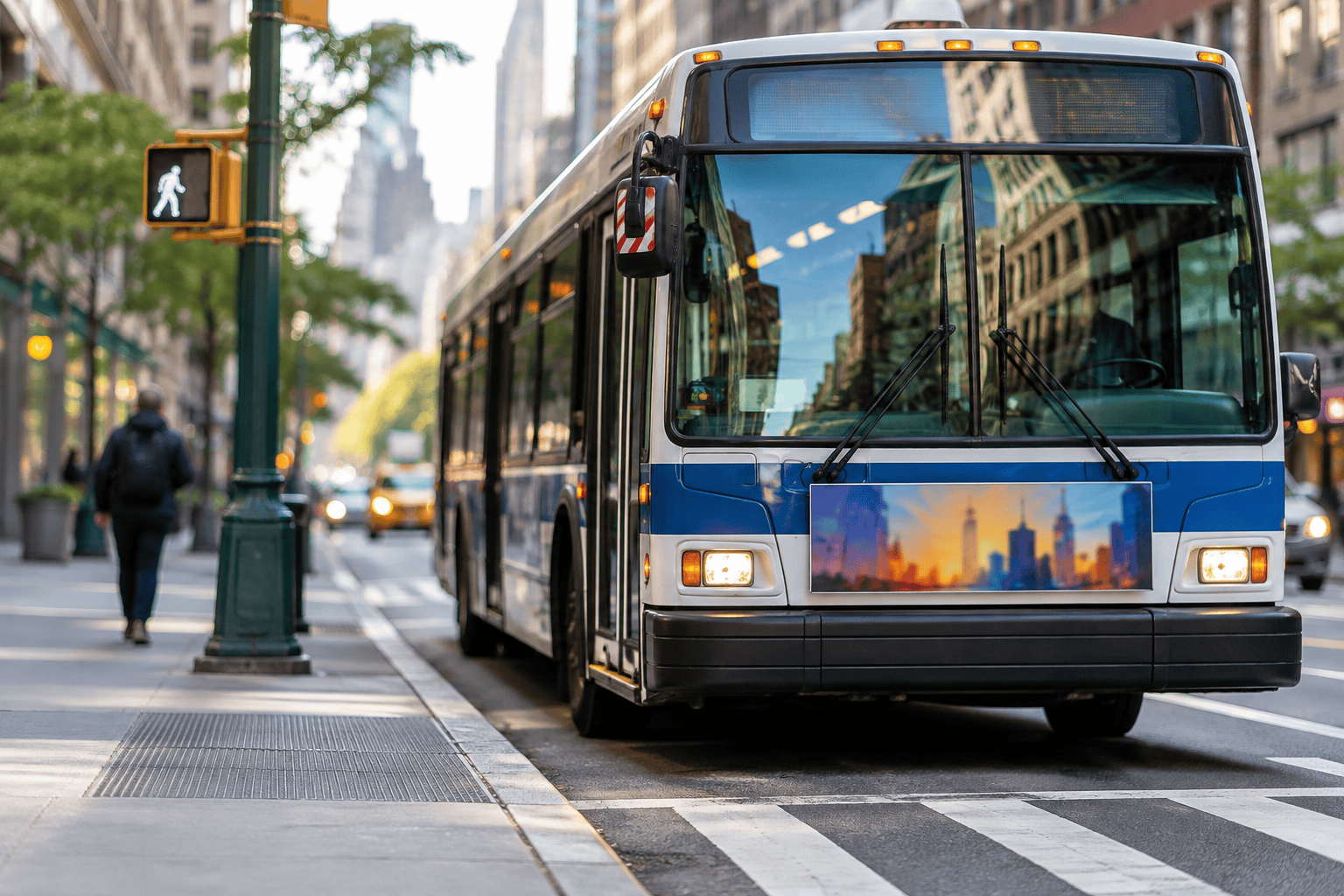
Hit by an MTA Bus in New York City: The Ninety Day Rule You Cannot Miss
An MTA bus accident settlement starts with a notice of claim served on the right bus operator within ninety days, under General Municipal Law section 50-e. “MTA” covers more than one bus operator, and the operator decides where the notice goes. The notice of claim is due ninety days after the accident, and it must […]

How No-Fault Insurance Works After a New York Car Accident
In New York, PIP insurance is no-fault coverage that pays your medical bills, part of your lost earnings and some expenses, whoever caused the crash. Insurance Law 5102(a) caps those benefits at fifty thousand dollars per person in basic economic loss, shared across all three. No-fault stops at four lines: that shared ceiling, two short […]
Why Our Attorneys Spent Four Days in a Houston Courtroom Classroom
Four attorneys from Caesar & Napoli spent four days this summer at the Lanier Trial Academy Master Class in Houston, Texas. Partners James C. Napoli, Kelsey Crowley and Christian J. Kubic attended, along with Thomas Napoli. The Lanier Trial Academy was founded by the trial lawyer Mark Lanier and is held each summer in Houston. […]