
So You Think You Can Text and Drive?
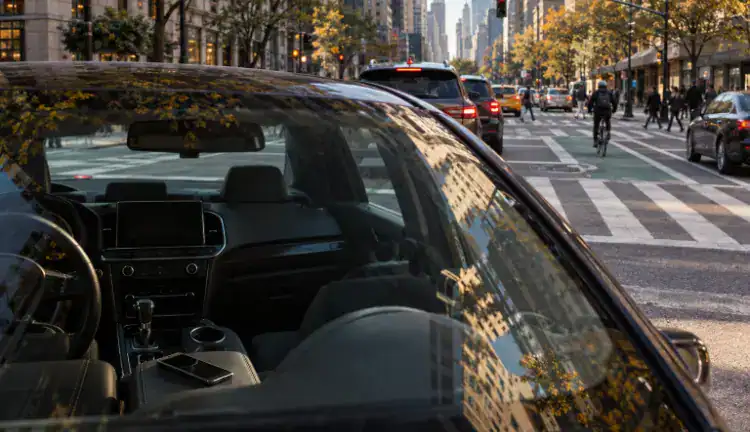
We see it every time we’re on the road: drivers talking on the phone, texting, or multitasking with various mobile apps. A recent survey confirmed that distracted driving is on the rise in the US, and it has now spread to include apps like Facebook, Instagram and Snapchat.
According to the survey, conducted by Braun research and published last month, 61% of drivers between the ages of 16 and 65 report that they text while driving. 27% use Facebook, and 17% take selfies.
Texting while driving was linked to at least 6% of auto collisions this year, and as this percentage is based only on the reported number, the actual number of collisions caused by texting and driving is assuredly much higher.
Americans aren’t unaware of the dangers of distracted driving. According to a 2014 survey by the AAA Foundation For Traffic Safety, over 80% of drivers describe texting while driving as “completely unacceptable.”
How can so many drivers that recognize the risks of distracted driving do it anyway? The Braun Research survey has some answers to that as well. 22% of those that admitted to texting while driving said they felt addicted to their mobile devices. Most frightening of all the data, 27% felt they could do it safely.
This false sense of confidence is most dangerous to the pedestrians, cyclists and other motorists that share the road with these distracted drivers, and do not anticipate a driver whose eyes aren’t on the road.
The state of New York has effected a number of changes to help drivers break this dangerous habit. Fines have increased dramatically for phone use in the car, and beginning in 2013 Governor Cuomo designated texting zones along the New York State Thruway and State Highways for drivers to park and safely operate their mobile devices.
In the last few years, apps like Live2Txt and Canary have been developed to disable alerts while driving and to notify parents of the unsafe driving behavior of their kids.
However, none of these solutions is foolproof. They are all simply tools to help habitual distracted drivers break their mobile “addiction,” and will have little impact on drivers that incorrectly believe they can safely text and drive.
Don’t wait for a life-altering collision to change your behavior. To borrow the words of AT&T’s It Can Wait campaign: No text is worth a life.
Sources: “Apps to Block Texting While Driving,” Verizon Wireless.
“Governor Cuomo Unveils ‘Texting Zones’ Along NYS Thruway and Highways for Drivers to Pull Over and Use Their Cell Phones,” www.nystate.gov, 23 September 2015.
Richtell, Matt, “Some People Do More Than Text While Driving,” The New York Times, 19 May 2015.
Related Practice Areas
Image note: photographs accompanying our blog articles are illustrative and digitally created. They do not depict actual clients, actual attorneys of this firm, or actual events.
Read more

Beyond the App: Unmasking Uber’s Strategy to Evade Passenger Liability
When a passenger steps into an Uber on the streets of New York, there is an implicit expectation that the multi-billion-dollar ride-hailing giant stands behind the safety of that journey. Yet, in courtrooms and arbitration proceedings across the country, Uber’s primary defense line remains remarkably consistent: we are merely a technology platform, not a transportation […]

When the Safety Net Fails: What Michael Wagner’s Story Teaches NYC Construction Workers About Labor Law 240(1) & Injury Rights
In the immediate aftermath of a severe construction site accident, most injured workers focus on one thing: getting back on their feet. They assume that if they play by the rules, report the incident, and file their claims, the safety net will be there to protect them and their families. Unfortunately, as millions of workers […]

Can New York City Be Liable for a Dangerous Street or Intersection?
When a pedestrian, bicyclist or motorist is seriously injured in a New York City traffic accident, the investigation should not always end with the drivers involved. In some cases, the design, operation or maintenance of the roadway itself may have contributed to the crash. New York City has a duty to maintain its streets in […]