
Travelers Beware: Danger in the City of Lights
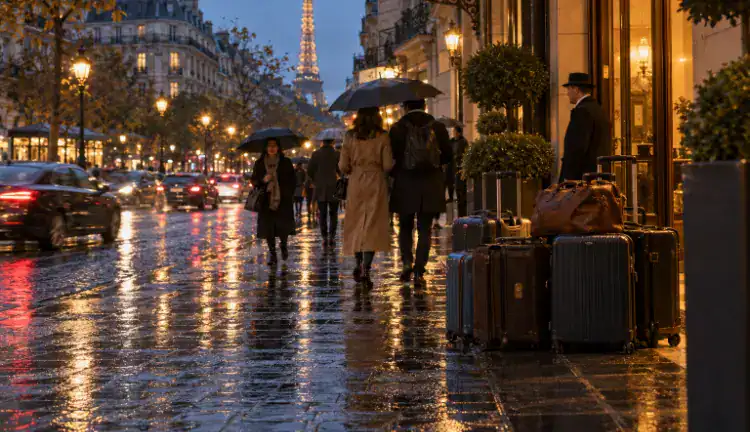
Paris has long held the reputation of a premier tourist destination for international travelers. It’s the second most visited city in all of Europe behind London, and for Asian tourists in particular Paris holds a singular regard as the romance and shopping capital of the world. Just under a million Chinese men and women visited Paris last year and spent over a billion euros shopping in the city-more than both the US and Japan. And for a while these numbers were growing rapidly, with a 23% increase in Chinese visitors to France from 2011 to 2012.
Why then are we now seeing a sudden falloff in the number of Asian tourists to Paris?Disappointment, for one. Because of its popularity as a travel destination, Paris is the first experience many Asian tourists have with a Western country, and it can be a rude awakening to the cultural differences between Asia and Europe. Common complaints include the city’s less than pristine streets, dodgy neighborhoods, and occasionally discourteous service.
But the more distressing reason for the close to 50% drop in Chinese tourism over the last year is the recent surge in thefts throughout the city. The staff of the Louvre Museum went on strike this April to protest the increasingly aggressive and, in several cases, violent pickpockets and thieves.
These thieves tend to specifically target Asian visitors because their relative unfamiliarity with the French language and customs make them easier to take advantage of. One of the more extreme cases of this ethnic profiling occurred last March when a group of 23 Chinese tourists were attacked and robbed of 7,500 euros in a suburb north of Paris.
The city of Paris has taken a number of safety measures in response to these incidents, such as increasing security at top tourist attractions and translating pickpocket warnings into Mandarin along the Paris metro.
But while Paris has come under international scrutiny for its increase in thefts, it is certainly not the city with hazards to tourists. In New York or any major city, there is no safeguard quite as effective as taking responsibility for your own security. Traveling in groups, remaining aware of your surroundings, and keeping your valuables out of the reach of pickpockets are all effective precautions for any place you visit.
Sources: Bilefsky, Dan, “Chinese Tourists Find a Movable Feast Best Left Behind,” New York Times, September 20 2014.
Chrisafis, Angelique, “Louvre Closed on Account of Pickpockets,” The Guardian, April 10 2013.
Related Practice Areas
Image note: photographs accompanying our blog articles are illustrative and digitally created. They do not depict actual clients, actual attorneys of this firm, or actual events.
Read more

Beyond the App: Unmasking Uber’s Strategy to Evade Passenger Liability
When a passenger steps into an Uber on the streets of New York, there is an implicit expectation that the multi-billion-dollar ride-hailing giant stands behind the safety of that journey. Yet, in courtrooms and arbitration proceedings across the country, Uber’s primary defense line remains remarkably consistent: we are merely a technology platform, not a transportation […]

When the Safety Net Fails: What Michael Wagner’s Story Teaches NYC Construction Workers About Labor Law 240(1) & Injury Rights
In the immediate aftermath of a severe construction site accident, most injured workers focus on one thing: getting back on their feet. They assume that if they play by the rules, report the incident, and file their claims, the safety net will be there to protect them and their families. Unfortunately, as millions of workers […]

Can New York City Be Liable for a Dangerous Street or Intersection?
When a pedestrian, bicyclist or motorist is seriously injured in a New York City traffic accident, the investigation should not always end with the drivers involved. In some cases, the design, operation or maintenance of the roadway itself may have contributed to the crash. New York City has a duty to maintain its streets in […]