
Victims of Amtrak Crash Face an Uphill Legal Battle
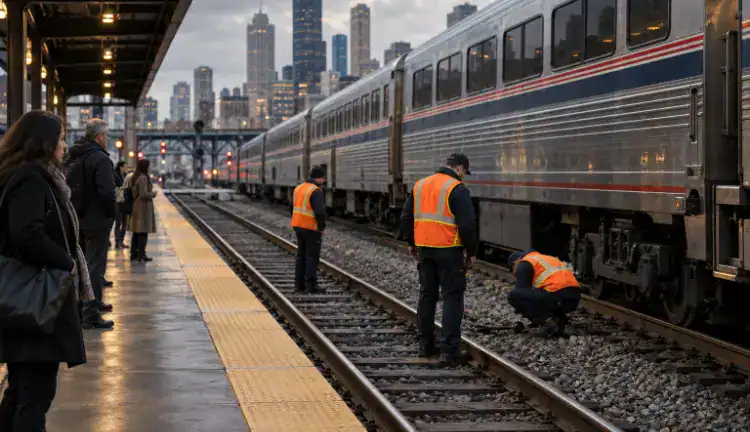
Only a dozen lawsuits have been filed against Amtrak in the weeks since the deadly train crash on May 12th, but there are more to come, and there is a good chance many of the victims will end up without fair compensation for the injuries they suffered.
8 people were killed and over 200 injured when an Amtrak train derailed while rounding a curve in North Philadelphia. The train’s black box data has shown that it was traveling at a speed of 106 miles per hour in a 50 mile per hour zone.
There is an ongoing investigation looking into whether the train engineer, Brandon Bostian was on his phone at the time of the crash. Mr. Bostian suffered a concussion from the crash and allegedly has no memories of the incident.
However, what is clear at this point is that the crash could have been prevented had Amtrak installed Automatic Train Control (ATC), a speed control system that would have allowed an outside operator to slow or stop the speeding train before it derailed. At the time of the incident, ATC had already been installed on the southbound track, but not on the northbound track that the train was using.
Amtrak President and CEO Joseph Boardman has since stated that the crash could have been avoided had ATC been installed on the northbound track.
Since 2008, Congress has required train companies across the country to install Positive Train Control (PTC), an even more advanced speed control system than ATC, no later than December 2015. Amtrak officials have claimed that they will have PTC operational on this northbound track by December 31st, 2015—the latest possible date for PTC installation. However, the Association of American Railroads estimates that over 80% of the company’s track will not be equipped by the deadline.
For the many victims of the crash and their families, the biggest challenge at hand now is the federal cap limiting damages from any single train crash to $200 million. This cap will force the over 200 injured and deceased victims to share a total amount of no more than $200 million in compensation, regardless of what their actual needs are.
While $200 million may seem like a large sum of money, when divided by dozens of families that have lost their primary income earners and individuals that will require lifelong medical care, it becomes woefully insufficient.
This won’t be the first time this federal cap has caused harm to the victims of an Amtrak crash. After a 2008 Amtrak crash in California killed 25 and injured 135, the presiding judge stated plainly in his ruling, “There is not enough money to compensate the victims for future medical care and past pain and suffering.”
Part of the reason this damages cap is so inadequate is that it was set by Congress back in 1997, and has not once been adjusted for inflation.
For those victims with minor and treatable injuries, the cap may pose a financial burden by limiting the compensation they can receive for their medical expenses and lost wages.
For those with life-altering injuries and lost loved ones, this cap threatens to significantly impact not only their quality of life and the caliber of medical care they receive, but also their children’s future. It is these same victims who bore the brunt of Amtrak’s negligence, who will now suffer the most because of an outdated law.
Sources: Chatterjee, Syantani, “Train engineer was texting just before California crash,” Reuters, 2 October 2008.
Itkowitz, Colby, “Amtrak faces a $200 million limit on what it can pay out to crash victims,” The Washington Post, 14 May 2015.
Lambert, Alyssa E., “Deadly Amtrak train derailment leads to litigation,” American Association for Justice, June 2015.
Related Practice Areas
Image note: photographs accompanying our blog articles are illustrative and digitally created. They do not depict actual clients, actual attorneys of this firm, or actual events.
Read more

Beyond the App: Unmasking Uber’s Strategy to Evade Passenger Liability
When a passenger steps into an Uber on the streets of New York, there is an implicit expectation that the multi-billion-dollar ride-hailing giant stands behind the safety of that journey. Yet, in courtrooms and arbitration proceedings across the country, Uber’s primary defense line remains remarkably consistent: we are merely a technology platform, not a transportation […]

When the Safety Net Fails: What Michael Wagner’s Story Teaches NYC Construction Workers About Labor Law 240(1) & Injury Rights
In the immediate aftermath of a severe construction site accident, most injured workers focus on one thing: getting back on their feet. They assume that if they play by the rules, report the incident, and file their claims, the safety net will be there to protect them and their families. Unfortunately, as millions of workers […]

Can New York City Be Liable for a Dangerous Street or Intersection?
When a pedestrian, bicyclist or motorist is seriously injured in a New York City traffic accident, the investigation should not always end with the drivers involved. In some cases, the design, operation or maintenance of the roadway itself may have contributed to the crash. New York City has a duty to maintain its streets in […]