
E-Bike, Scooter and Bicycle Accidents in New York City: Who Pays
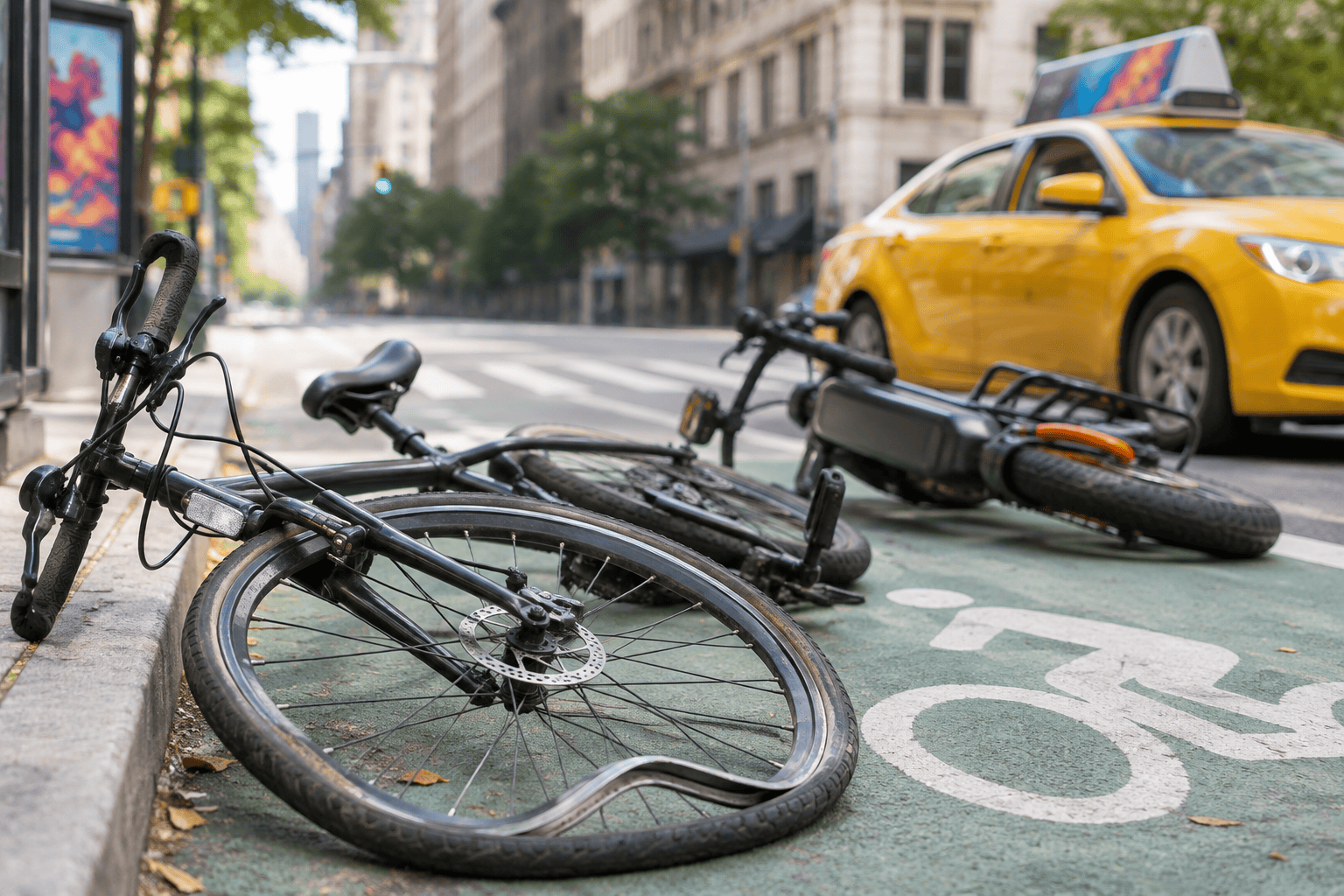
After most e-bike accidents in New York, the no-fault insurer of the car, truck or bus that hit you pays first. That coverage pays medical bills and part of lost pay up to fifty thousand dollars under Insurance Law 5102(a), but nothing for pain, which takes a lawsuit, a serious injury and a share of fault no larger than the driver’s.
The car, truck or bus that hit you pays first, up to fifty thousand dollars
A bicyclist, e-bike rider or e-scooter rider struck by a motor vehicle generally claims no-fault through that vehicle’s policy, up to fifty thousand dollars per person in basic economic loss (5102(a)).
Inside that total, lost earnings pay up to two thousand dollars a month for no more than three years (5102(a)(2)), less a twenty percent deduction and offsets for benefits such as workers’ compensation (5102(b)). Other reasonable expenses pay up to twenty-five dollars a day for one year (5102(a)(3)). Some policies add an optional twenty-five thousand dollars (5102(a)(5)).
No-fault Regulation 68 sets the paperwork windows: written notice of claim within thirty days, health care bills within forty-five days and lost earnings claims within ninety days.
On those statutory figures alone, a rider earning three thousand dollars a month and out of work for four months loses twelve thousand dollars. Eighty percent of each month is two thousand four hundred dollars, but the cap is two thousand dollars, so no-fault pays eight thousand dollars.
Suing the driver takes a serious injury and a smaller share of the fault
To recover pain and suffering from the driver, a rider must first show a serious injury under Insurance Law 5102(d). As amended effective May 26, 2026, the definition has eight categories: death; dismemberment; significant disfigurement; a fracture; loss of a fetus; permanent loss of use of a body organ, member, function or system; permanent consequential limitation of use of a body organ or member; or significant limitation of use of a body function or system.
The second gate is fault. CPLR 1411(b) bars recovery in motor vehicle cases, including cyclists struck by a vehicle, when the rider’s culpable conduct is greater than the driver’s, or greater than all the defendants’ combined. When the rider’s share is not greater, CPLR 1411(a) reduces damages in proportion. Subsection (b) was added by Part EE of Chapter 58 of the Laws of 2026 and applies to actions commenced on or after May 26, 2026.
Do cyclists have to stop at stop signs? Yes, and the driver’s lawyer will ask
Cyclists have to stop at stop signs in New York because Vehicle and Traffic Law 1231 gives a person riding a bicycle the duties of a driver. After a crash, the driver’s lawyer turns that rule and others into questions about your share of fault.
“Did you stop at the stop sign?” Under CPLR 1412, the defense must plead and prove your culpable conduct. A rolled stop sign is an argument about your share and does not decide the case by itself, although under 1411(b) that share now matters more.
“Was the driver turning across the bike lane?” Vehicle and Traffic Law 1146 requires every driver to exercise due care to avoid colliding with any bicyclist. A right hook across a bike lane asks whether the driver looked at all. VTL 1225-c and 1225-d also restrict handheld phone and electronic device use while driving. Administrative Code 19-190 makes a driver’s failure to yield to a pedestrian or cyclist with the right of way a criminal offense, but that criminal law pays no compensation.
“Were you wearing a helmet, using lights, riding in the lane?” The defense raises these as arguments that you added to your own injury. Answer them honestly, because their weight depends on your facts and the defense’s proof.
Working riders, delivery workers included, can have three claims on three clocks
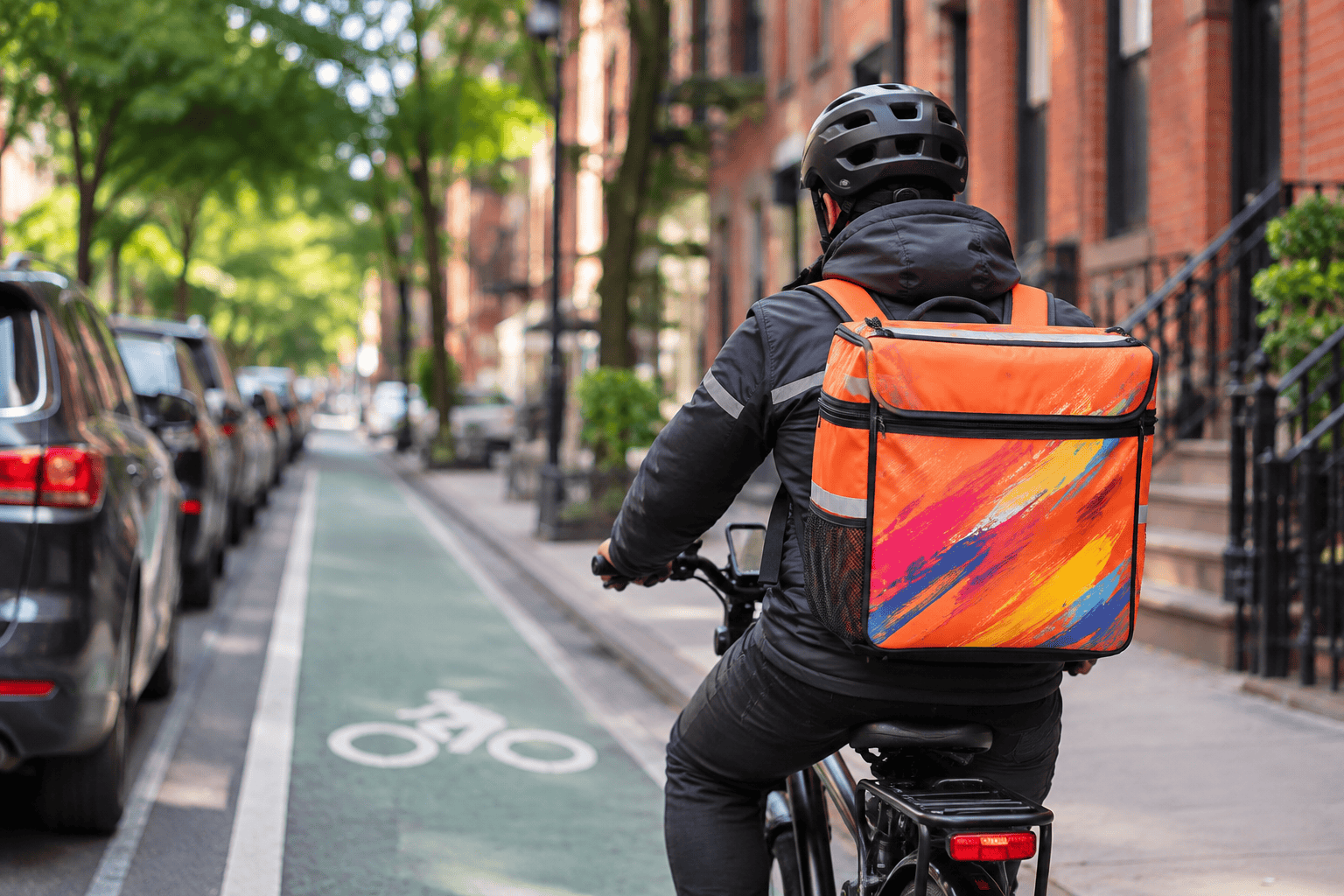
A rider hit while working may claim workers’ compensation, no-fault and a suit against the driver at once, each on its own deadline.
- Workers’ compensation. Give your employer written notice within thirty days, and file Form C-3 with the Board within two years. The Workers’ Compensation Board states that benefits are available to every eligible worker “regardless of citizenship or immigration status.”
- No-fault. Notify the insurer in writing within thirty days.
- A suit against the driver. Under Workers’ Compensation Law 29(1), a worker who takes compensation must start that suit within six months after compensation is awarded, and in any event within one year from the date the cause of action accrues. Workers’ compensation is the exclusive remedy against an employer that carries coverage (WCL 11), which is why the lawsuit targets the driver.
Caesar & Napoli lists this result on its Verdicts and Settlements page: “$11,000,000 Bicycle Crash Verdict. Obtained a verdict of $11,000,000 for a bicyclist who was struck by a car from behind while working. Caesar & Napoli turned down an offer of $600,000 during negotiations.” Prior results do not guarantee a similar outcome.
App delivery riders face a contested threshold question about employment status, which turns on the facts of the work, not just the app’s label.
A lithium battery fire is a separate product claim against the maker or seller. Keep the battery, the charger and the receipt.
A City truck, transit bus or broken street cuts three years to ninety days
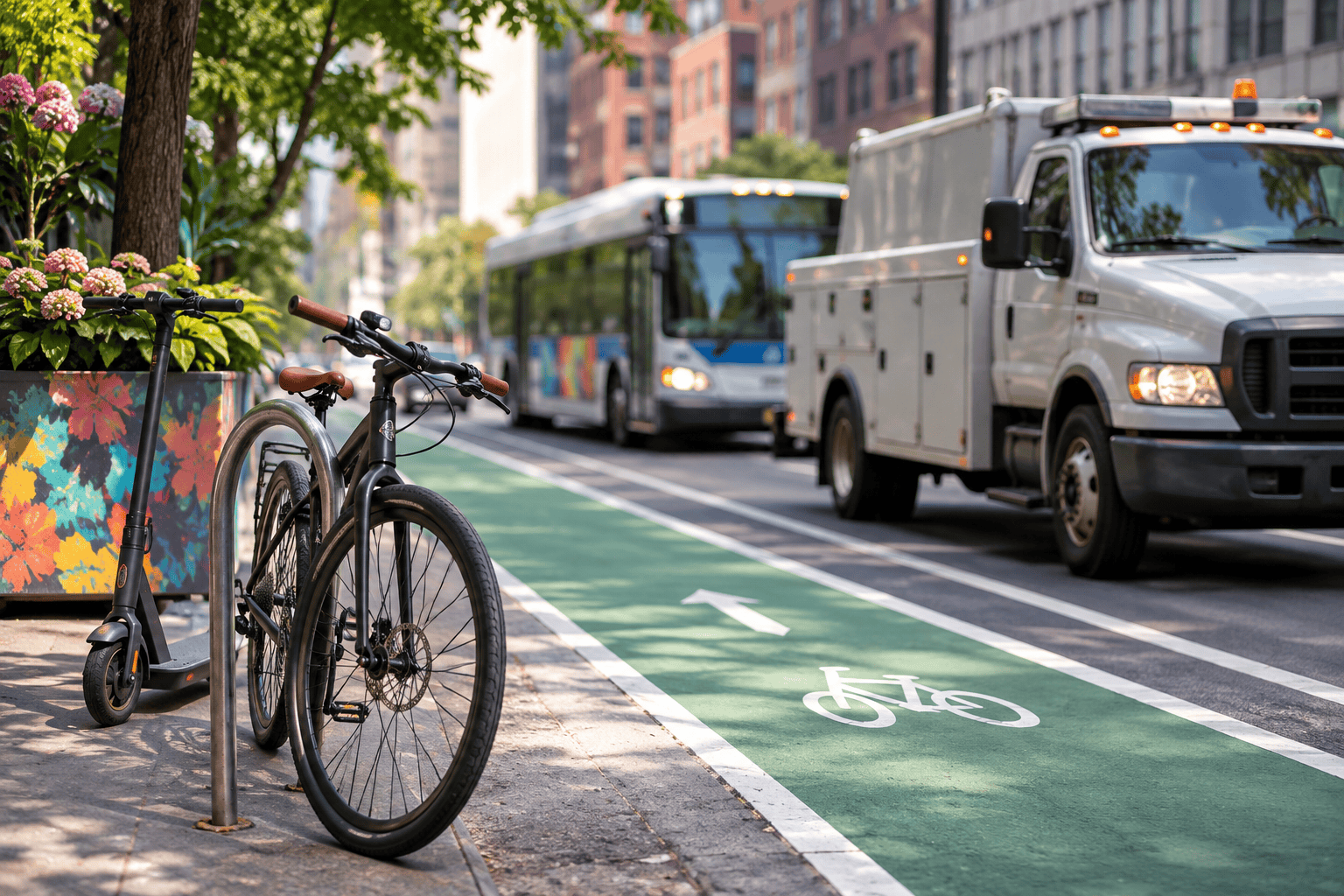
If a City-owned truck hits a rider, a notice of claim is due within ninety days under General Municipal Law 50-e, although CPLR 214 generally allows three years to sue a private driver. The City may demand an examination under General Municipal Law 50-h, and if it is not held within ninety days of the demand, the rider may sue. The lawsuit must start within one year and ninety days under General Municipal Law 50-i.
For a transit bus, NYC Transit’s own claim form states ninety days for the claim and one year and ninety days to start a legal action. For a broken street, Administrative Code 7-201(c)(2) generally bars a suit against the City over a defective street or crosswalk unless the City had prior written notice and failed to repair it within fifteen days.
Keep the bike unrepaired, because the damage shows how the crash happened
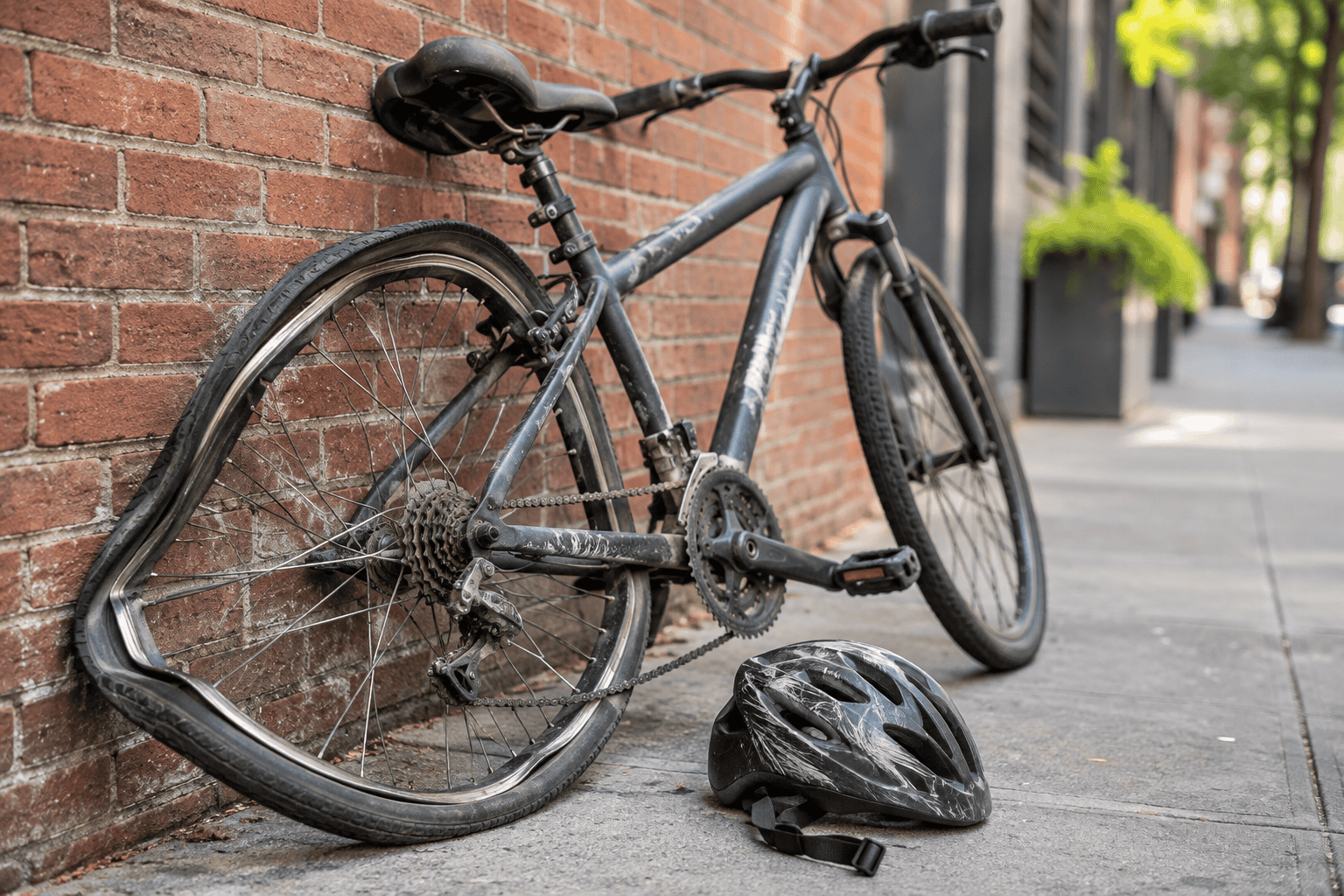
The bike or scooter is the first piece of evidence, so keep it unrepaired and unsold. A bent rear wheel and a crushed side frame tell different stories about who hit whom. The helmet shows where your head struck. Building and bus cameras may have recorded the crash, so request that footage early. If you were working, the app trip or order record places you on the street at a specific minute. Caesar & Napoli examines evidence early to determine liability and works with accident reconstructionists and engineers who read that damage.
Photograph the bike from every side before any repair shop sees it.
Quick answers on e-bike rules, no-fault and car doors
Are e-bikes legal in New York City?
Yes. New York authorized bicycles with electric assist and electric scooters in 2020 under Vehicle and Traffic Law 102-c and 114-e. A faster device without working pedals may instead be a moped, which must be registered. NYC DOT’s Bicycle Crash Data 2025 report counted nine hundred one e-bike riders injured in reported 2025 crashes, with data as of April 15, 2026.
Does no-fault cover e-bike riders in New York?
Yes, when a motor vehicle hits you. No-fault covers motor vehicles, so a crash with no car, truck or bus usually brings no no-fault claim, and your own health insurance pays for treatment. E-scooter accidents in NYC follow the same split. A device that is legally a moped changes the picture.
Can a cyclist sue a driver for dooring in New York?
Yes, a dooring accident in NYC can support a claim. Vehicle and Traffic Law 1214 bars any person from opening a vehicle door on the traffic side unless it is reasonably safe, so a passenger can be responsible too. Photograph the door’s position and get witness names.
What should I do if an e-bike hits me while I am walking?
Call the police and identify the rider, including any delivery bag or app branding. Use your own health insurance for treatment. Many riders carry no insurance, so who the rider worked for often decides whether anyone can pay. Caesar & Napoli looks early at the liable party’s ability to pay.
Your first week after the crash: four steps and one phone call
Four clocks can start in the first week, and each one counts in days.
- Get treatment, and give the no-fault insurer written notice within thirty days.
- If you were working, notify your employer in writing within thirty days.
- If the driver fled, report the crash to police within twenty-four hours, as Insurance Law 5208(a)(2) generally requires for an unidentified-driver claim.
- If a City vehicle, a transit bus or a City street was involved, the ninety-day notice clock is already running.
Consultations at Caesar & Napoli are free, and most personal injury cases are handled on a no-win, no-fee basis. The attorney you meet handles your case from beginning to end. The firm works in English and Russian from its main office in the Woolworth Building at 233 Broadway, with offices in Queens and Brooklyn. Call (888) 235-6766.
Related practice areas
- Bicycle Accidents
- Pedestrian Injuries
- Auto Insurance Litigation
- Workers’ Compensation Claims
- Motor Vehicle Injuries
Prior results do not guarantee a similar outcome. Every case is decided on its own facts. This article is general information and is not legal advice about any individual claim.
Image note: photographs accompanying our blog articles are illustrative and digitally created. They do not depict actual clients, actual attorneys of this firm, or actual events.
Read more

Brain Injury From a Hospital Mistake in New York: What a Malpractice Claim Must Prove
Yes, you can sue a New York hospital for a brain injury when hospital negligence, a departure from accepted practice, caused the loss of oxygen. Most hospitals allow two years and six months under CPLR 214-a. An NYC Health + Hospitals facility requires a notice of claim within ninety days under General Municipal Law 50-e. […]

Snow and Ice Falls in New York City: Who Had to Clear It and When
Under NYC snow removal rules, the property owner next to a sidewalk has four hours to clear it after daytime snow stops, and until the next morning after evening or overnight snow. The stop time also decides whether the “it was still snowing” defense applies, and that fact disappears as fast as the ice. How […]
Hit by an MTA Bus in New York City: The Ninety Day Rule You Cannot Miss
An MTA bus accident settlement starts with a notice of claim served on the right bus operator within ninety days, under General Municipal Law section 50-e. “MTA” covers more than one bus operator, and the operator decides where the notice goes. The notice of claim is due ninety days after the accident, and it must […]