
Lead Paint Danger Much Greater Than NYC Housing Authority Previously Reported
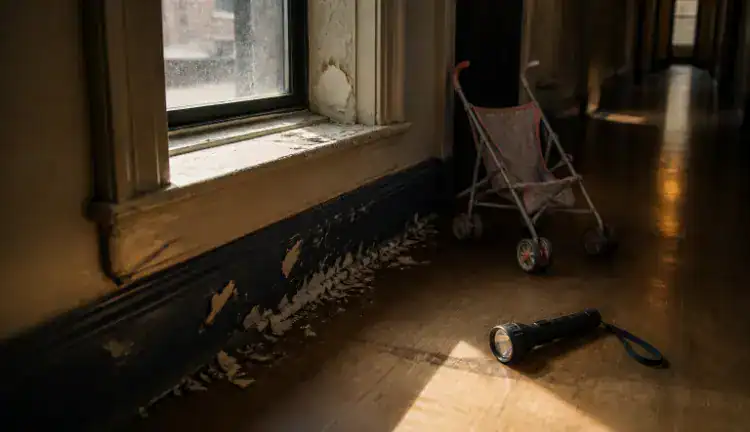
The next time you hear the head of the New York City Housing Authority tell you not to worry about the widespread presence of lead paint in public housing developments, don’t believe her.
When over 200 children living in public housing were found to have high lead levels in their blood, NYCHA CEO Shola Olatoye evaded responsibility by announcing that only 17 of the housing authority’s apartments contained dangerous levels of lead paint. Directly contradicting this data were the city Health Department’s findings that 63 of those apartments tested positive for lead paint.
What could account for the enormous discrepancy between these figures?
Even if an apartment is covered in lead paint, the NYCHA considers it “no risk” if the paint is not visibly chipped upon inspection and if the apartment is not inhabited by children under the age of 6.
Manhattan U.S. Attorney Preet Bharara is presently conducting a civil investigation into whether the NYCHA was dishonest when reporting the condition of its apartments to the federal government.
Lead paint was banned in New York in 1960, and then banned across the country in 1978. However, it has still not been removed from numerous buildings around the city. When ingested in the form of paint chips, or inhaled as dust, lead has been found to cause behavioral problems, learning disorders, and brain damage in children.
Many public housing developments were constructed before 1960, and according to the NYCHA, approximately 55,000 of its apartments may still contain lead paint. Over 10,000 of those apartments are inhabited by children under the age of 6.
The Red Hook East Houses is one of the oldest housing developments in the country, and it is also the worst lead paint offender. Between January 2013 and March 2015, the NYCHA inspected 113 apartments in the Red Hook development. Lead paint was found in 105 of them.
In 2010, the NYCHA began abating the lead paint in apartments that tested positive for the toxic chemical. However, the housing authority has adopted a policy of waiting until tenants move out before abating the lead paint.
“Lead paint abatement should be part of the annual inspection. Why would you inspect a pre-1960 or pre-1978 apartment without abating? It defies the imagination,” said City Councilman Ritchie Torres, who is a chairman of the Public Housing Committee.
If you are living in a pre-1960 public housing apartment with a young child, do not expect the NYCHA to notify you of the presence of lead paint in your building. They have demonstrated that they will do no such thing. Call 311 or visit 311 online to report chipped paint and have your apartment inspected.
Sources: “Lead-Based Paint,” NYC Housing Preservation & Development.
Smith, Greg B., “Feds probing questionable NYCHA statistics on lead tainted apartments,” New York Daily News, 12 June 2016.
Smith, Greg B., “NYCHA Red Hook East Houses have thousands of apartments with lead paint — the most of any public housing project in the city,” New York Daily News, 11 June 2016.
Related Practice Areas
Image note: photographs accompanying our blog articles are illustrative and digitally created. They do not depict actual clients, actual attorneys of this firm, or actual events.
Read more

Beyond the App: Unmasking Uber’s Strategy to Evade Passenger Liability
When a passenger steps into an Uber on the streets of New York, there is an implicit expectation that the multi-billion-dollar ride-hailing giant stands behind the safety of that journey. Yet, in courtrooms and arbitration proceedings across the country, Uber’s primary defense line remains remarkably consistent: we are merely a technology platform, not a transportation […]

When the Safety Net Fails: What Michael Wagner’s Story Teaches NYC Construction Workers About Labor Law 240(1) & Injury Rights
In the immediate aftermath of a severe construction site accident, most injured workers focus on one thing: getting back on their feet. They assume that if they play by the rules, report the incident, and file their claims, the safety net will be there to protect them and their families. Unfortunately, as millions of workers […]

Can New York City Be Liable for a Dangerous Street or Intersection?
When a pedestrian, bicyclist or motorist is seriously injured in a New York City traffic accident, the investigation should not always end with the drivers involved. In some cases, the design, operation or maintenance of the roadway itself may have contributed to the crash. New York City has a duty to maintain its streets in […]