
Lead Contamination in NY Schools; How Many Years Did It Go Unnoticed?
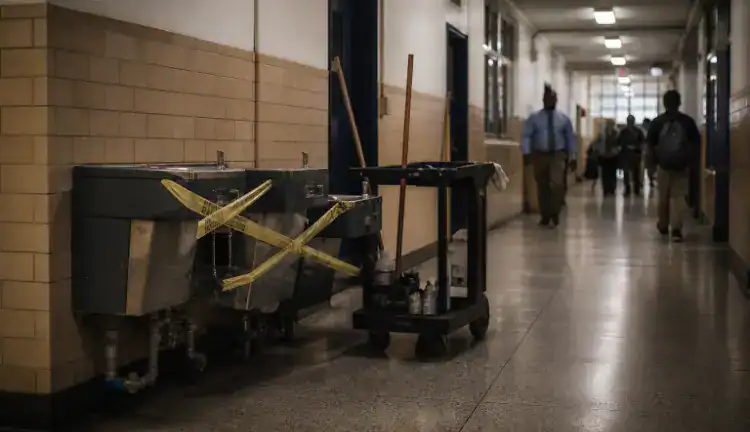
Over 80 New York drinking water systems contain lead levels over the federal action limit, say Environmental Protection Agency records. The largest of these systems, located in Tarrytown, NY, supplies water to over 11,000 people. 16 of the systems supply schools and day care centers.
New York has become more diligent in its testing in the wake of the catastrophic findings in Flint, MI and Newark, NJ.
In September of last year, the proportion of children with elevated lead levels in Flint was found to have doubled since the city switched water sources in 2014. Because the effects of lead poisoning can sometimes take years to become apparent, Michigan chief medical executive Eden Wells has recommended considering all 8,657 children in Flint under the age of 6 exposed, “regardless of what their blood level is on Jan. 11.” Because of the mass exposure to lead by the city’s children, Flint mayor Dayne Walling anticipates a greater need for mental health services and special education in years to come.
Earlier this year, dangerous lead levels were found in 30 schools in Newark. Blood tests are now being conducted to determine how many students have suffered exposure to lead.
In New York, many schools have gone over a decade without sampling for lead contamination. “They feel it’s almost better not to sample, because you’re better off not knowing,” said civil engineer and lead safety proponent Marc Edwards.
The 1988 Lead Contamination Control Act has been one of the only federal laws aimed at regulating lead levels. However, a 1996 federal appeals court decision struck down parts of the law that impacted schools, including requirements that schools scrap lead-lined water tanks and regularly test drinking water.
“No one was testing,” said Robert Barrett, chief executive of New Jersey water testing facility Aqua Pro-Tech Laboratories. “If you’re a mom-and-pop coffee shop in Sparta, New Jersey, and have a private well, you’re required to certify every quarter. But if you’re a school, you don’t have to do anything.”
Barrett credits the recent string of high profile lead findings for a surge in water testing in schools. “Now all of a sudden they’re all going crazy.”
While New York water delivered from upstate reservoirs does not naturally contain lead, it can become contaminated through pipes and fixtures in the plumbing of older buildings.
Pregnant women and young children are most at risk for lead poisoning, which can cause delayed growth and development as well as learning and behavioral problems. According to the World Health Organization, lead exposure can also cause “anemia, hypertension, renal impairment, immunotoxicity and toxicity to the reproductive organs.” The effects of lead on the brain are considered irreversible.
If you believe that your water may be contaminated with lead, boiling it will not help. In fact, boiling water only concentrates its lead levels. Visit nyc.gov/311 or call 311 to request a free lead testing kit.
The families of over 50 children in Flint have already launched lawsuits against the government and the private companies responsible for the lead exposure. If you or your child has been exposed to lead, you should not have to bear the financial burden of medical expenses. Contact an attorney to find out about your legal recourse.
Sources: Harris, Elizabeth A. and Kate Taylor, “Tests Show Lead Persists in Some New York City Schools,” The New York Times, 8 April 2016.
“Lead Poisoning Prevention,” New York State Department of Health, October 2013.
Slattery, Denis, “New York drinking water’s lead levels over legal limit in more than 80 supplies, EPA records indicate,” New York Daily News, 9 April 2016.
Tanner, Kristi, “All Flint’s children must be treated as exposed to lead,” Detroit Free Press, 16 January 2016.
Wang, Yanan, “In Flint, Mich., there’s so much lead in children’s blood that a state of emergency is declared,” The Washington Post, 15 December 2015.
Wines, Michael, Patrick McGeehan and John Schwartz, “Schools Nationwide Still Grapple With Lead in Water,” The New York Times, 26 March 2016.
Related Practice Areas
Image note: photographs accompanying our blog articles are illustrative and digitally created. They do not depict actual clients, actual attorneys of this firm, or actual events.
Read more

E-Bike, Scooter and Bicycle Accidents in New York City: Who Pays
After most e-bike accidents in New York, the no-fault insurer of the car, truck or bus that hit you pays first. That coverage pays medical bills and part of lost pay up to fifty thousand dollars under Insurance Law 5102(a), but nothing for pain, which takes a lawsuit, a serious injury and a share of […]

Brain Injury From a Hospital Mistake in New York: What a Malpractice Claim Must Prove
Yes, you can sue a New York hospital for a brain injury when hospital negligence, a departure from accepted practice, caused the loss of oxygen. Most hospitals allow two years and six months under CPLR 214-a. An NYC Health + Hospitals facility requires a notice of claim within ninety days under General Municipal Law 50-e. […]

Snow and Ice Falls in New York City: Who Had to Clear It and When
Under NYC snow removal rules, the property owner next to a sidewalk has four hours to clear it after daytime snow stops, and until the next morning after evening or overnight snow. The stop time also decides whether the “it was still snowing” defense applies, and that fact disappears as fast as the ice. How […]