
When the Safety Net Fails: What Michael Wagner’s Story Teaches NYC Construction Workers About Labor Law 240(1) & Injury Rights
In the immediate aftermath of a severe construction site accident, most injured workers focus on one thing: getting back on their feet. They assume that if they play by the rules, report the incident, and file their claims, the safety net will be there to protect them and their families.
Unfortunately, as millions of workers learn the hard way, navigating workers’ compensation and disability systems alone can quickly turn into a grueling, demoralizing battle.
The tragic story of Michael Wagner, a carpenter who survived a terrifying 35-foot drop from a man-lift, serves as a heartbreaking indictment of how easily injured workers can fall through administrative cracks. After nearly 18 years of severe chronic pain, claim denials, financial hardship, and bureaucratic delays, Michael died by suicide in 2018.
He left behind 694 private video diaries documenting his struggle. His daughter, Brittany Wagner, later shared his story in The New York Times to bring light to a systemic crisis facing injured workers across the nation.
For construction workers in New York City, Michael’s story hits particularly close to home. Working high above the streets of Manhattan, Brooklyn, Queens, the Bronx, and Staten Island is inherently dangerous. However, unlike many other states, New York has unique and powerful legal protections designed specifically to prevent tragedy after gravity-related accidents.
Here is what NYC construction workers need to know about how the system breaks down, why New York’s Labor Law Section 240(1) matters, and how to protect your rights after a fall.
1. The NYC Difference: What Is Labor Law Section 240(1) (“The Scaffold Law”)?
Michael Wagner fell 35 feet from a mechanical lift in Ohio, where his primary recourse was restricted largely to a heavily eroded workers’ compensation system that eventually paid him a meager $15,000 lump sum.
In New York, the legal landscape for elevation-related falls is drastically different.
Under New York Labor Law Section 240(1), commonly known as the Scaffold Law, property owners and general contractors are held strictly liable for gravity-related injuries on job sites when they fail to provide proper protection. This applies to falls from:
- Scaffolds and staging
- Ladders (faulty, unsecured, or improper height)
- Man-lifts, boom lifts, and bucket trucks
- Roofs, staging platforms, or structural steel framework
- Falls involving falling objects that were improperly secured
Why Absolute Liability Matters for NYC Workers
Under Labor Law 240(1), if an owner or general contractor fails to provide adequate, working fall protection or proper access equipment, they cannot blame the worker for the accident. Even if your employer claims you “should have been more careful,” or if you returned to work to try to support your family before realizing the full extent of your injuries, the law places the burden of safety directly on the site owners and contractors.
2. The “Invisible” Injury Trap: Why Pushing Through Pain Sabotages Your Claim
When Michael fell 35 feet, diagnostic tests initially failed to pinpoint the exact root of his excruciating full-body pain. Because he didn’t have visible broken bones or immediate scarring, he felt pressure to push through the pain and return to work as a single father supporting two daughters.
His employer later used that dedication against him, claiming he was “faking” the injury because he had returned to work.
What Injured Construction Workers in NYC Must Do
- Never “tough it out”: Continuing to perform heavy labor on an injured spine or joint damages your body further and gives insurance defense lawyers an excuse to argue your injury happened elsewhere or was pre-existing.
- Get specialized medical imaging immediately: Conditions like herniated discs, Complex Regional Pain Syndrome (CRPS), traumatic brain injuries (TBIs), and soft-tissue tears often do not show up on basic hospital X-rays. Demand evaluations from independent specialists who understand occupational trauma.
- Document every detail: Report the incident to your shop steward, foreman, or site supervisor immediately, and demand a written incident report before leaving the site or seeking care.
3. Workers’ Comp vs. Personal Injury Lawsuits in New York
Many NYC workers incorrectly believe that Workers’ Compensation is their only option after an injury.
While Workers’ Compensation provides basic medical coverage and limited weekly wage benefits regardless of fault, it does not cover pain and suffering, lost future earning capacity, or full quality-of-life damages.
| Feature | NY Workers’ Compensation | NYC Labor Law 240(1) Lawsuit |
|---|---|---|
| Fault requirement | No-fault | Strict liability (owners and general contractors) |
| Pain and suffering | Not covered | Recoverable |
| Lost wages | Partial (subject to a statutory cap) | Past and future lost earnings |
| Right to sue employer | Generally prohibited | Claim against the property owner and general contractor instead |
| Union pension benefits | Not included | Lost pension and annuity contributions can be recovered |
A third-party Labor Law lawsuit allows injured NYC tradespeople, including carpenters, ironworkers, electricians, laborers, and plumbers, to secure the financial compensation required for lifelong care and financial stability.
4. Equipment Failures & Third-Party Negligence
Michael Wagner’s fall was triggered when a 66-foot telescoping lift “popped” and dropped. In New York, equipment failure opens multiple avenues for recovery beyond workers’ comp:
- Labor Law 240(1) Claims: Against the building owner and general contractor for failing to provide safe, properly maintained elevation devices.
- Labor Law 241(6) Claims: For violations of specific, concrete safety rules outlined in the New York State Industrial Code (e.g., failure to maintain mechanical equipment, grease hazards, or defective safety catches).
- Product Liability Claims: Against the manufacturer or distributor of defective heavy machinery, scaffolding, or fall-harness systems.
- Subcontractor / Maintenance Claims: Against third-party vendors responsible for inspecting, servicing, or operating equipment on site.
How to Protect Your Family After a NYC Job Site Fall
If you or a loved one has suffered a fall or elevation-related injury on a NYC construction site, take these critical steps immediately:
- Report the Fall: Notify your supervisor and ensure a detailed NYC Department of Buildings (DOB) or site accident report is created.
- Take Photos & Videos: If possible, take photos of the defective equipment, missing guardrails, unanchored ladders, or hazard area before the contractor alters the scene.
- Do Not Give Recorded Statements to Insurance Adjusters: Insurance carriers representing property owners and general contractors reach out quickly to minimize their payout. Speak with a legal advocate first.
- Consult an Experienced NYC Construction Accident Attorney: The interplay between NY Labor Law 240(1), 241(6), 200, and Workers’ Compensation requires immediate investigation and site preservation.
You Don’t Have to Fight the System Alone
Michael Wagner’s story is a tragic reminder of what happens when injured workers are left to fight massive corporations and insurance companies by themselves. At our firm, we fight tirelessly to ensure NYC construction workers receive the full protection and maximum financial recovery provided under New York law.
If you’ve been injured on a job site, contact our New York office today for a free, confidential consultation.
Crisis Support Resources
If you or someone you know is struggling with chronic pain, depression, or thoughts of self-harm, please know that help is available. Call or text 988 to reach the 988 Suicide & Crisis Lifeline, available 24/7. You can also visit SpeakingOfSuicide.com/resources for additional support options.
Source: Brittany Wagner, “The $15,000 Settlement That Destroyed My Father’s Life,” The New York Times, September 2026.
This article is for informational purposes only and does not constitute legal advice.
Related Practice Areas
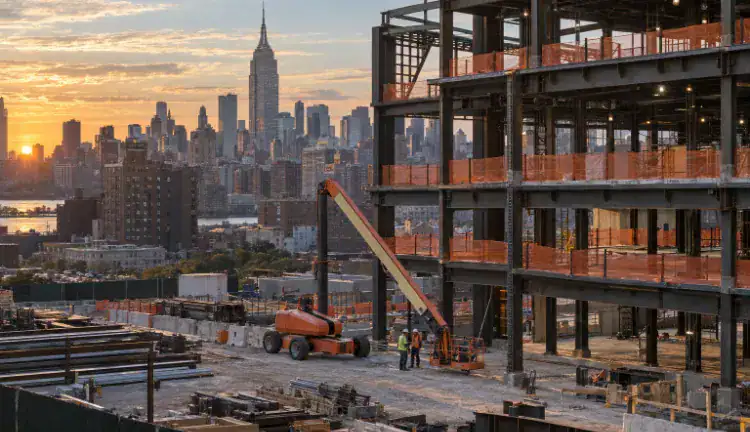
Image note: photographs accompanying our blog articles are illustrative and digitally created. They do not depict actual clients, actual attorneys of this firm, or actual events.
Read more

E-Bike, Scooter and Bicycle Accidents in New York City: Who Pays
After most e-bike accidents in New York, the no-fault insurer of the car, truck or bus that hit you pays first. That coverage pays medical bills and part of lost pay up to fifty thousand dollars under Insurance Law 5102(a), but nothing for pain, which takes a lawsuit, a serious injury and a share of […]

Brain Injury From a Hospital Mistake in New York: What a Malpractice Claim Must Prove
Yes, you can sue a New York hospital for a brain injury when hospital negligence, a departure from accepted practice, caused the loss of oxygen. Most hospitals allow two years and six months under CPLR 214-a. An NYC Health + Hospitals facility requires a notice of claim within ninety days under General Municipal Law 50-e. […]

Snow and Ice Falls in New York City: Who Had to Clear It and When
Under NYC snow removal rules, the property owner next to a sidewalk has four hours to clear it after daytime snow stops, and until the next morning after evening or overnight snow. The stop time also decides whether the “it was still snowing” defense applies, and that fact disappears as fast as the ice. How […]