
The Real Reason American Companies Hire Undocumented Immigrants
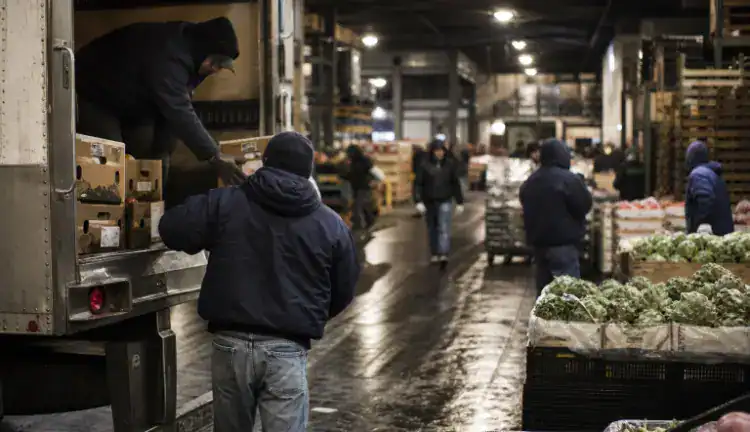
It may be illegal, but hiring undocumented workers is a long-standing practice in the agriculture and food production industries. While the oft-given justification is that these workers “do jobs Americans won’t,” this is not necessarily the reason many employers hire them. A more accurate statement might be that undocumented immigrant workers tend to do jobs Americans would do, but they do it for lower pay and under unsafe conditions. And that, at its core, is the problem: employers who hire undocumented workers often treat them poorly because they can. Meanwhile, undocumented workers are risking life and limb for their income, and if they complain, they risk losing their jobs or being deported.
Case Farms is a prime example of this issue. The company, which supplies chicken to Boar’s Head, Kentucky Fried Chicken, Taco Bell, and Popeye’s, as well as to the federal government for school-lunch programs, has a long history of hiring undocumented immigrant workers. The company’s plant in Winesburg, Ohio initially employed predominately local Amish workers, and then began recruiting employees from nearby Rust Belt cities as the plant expanded.
Faced with a high turnover rate, Case Farms sent recruiters to Texas border towns to bring in migrant farmworkers. The workers were offered bus tickets to Ohio and local housing. However, many found their living conditions—cramped quarters with no furniture or heat in winter, and sometimes without running water—unbearable, and quit. Case Farms realized it needed workers with no other options. That’s when a human-resources manager named Norman Beecher drove a large passenger van down to Indiantown, Florida, where thousands fleeing the Guatemalan civil war had taken refuge. These were the desperate workers Case Farms had been looking for.
The Maya refugees Beecher recruited worked so hard that soon, Case Farms was regularly sending vans down to Indiantown to hire more. Beecher told labor historian Leon Fink that he preferred the Maya refugees to undocumented Mexican workers because the Mexican workers would go back home at Christmastime to be with their families, but “Guatemalans can’t go back home. They’re here as political refugees. If they go back home, they get shot.”
Bill Beardall, executive director of the Equal Justice Center—a nonprofit law firm in Texas that represents low-wage workers—says of situations like this: “What you end up with when you have a group of workers who are relegated to a second-class status is it stimulates a race to the bottom where some employers, the unscrupulous employers, prefer to hire those workers precisely because they’re exploitable.” The Maya refugee workers at Case Farms were subject to the same poor conditions that previous workers who left the plants faced, only they did not have the options the others had.
Hiring undocumented workers keeps costs down. In the restaurant industry, where low profit margins and high employee turnover present constant challenges, hiring undocumented workers is often a default solution. When these workers provide their documentation, as long as it seems valid, employers are under no obligation to verify it. Even though it is illegal to hire undocumented immigrants, guilty employers are frequently not held accountable.
Employers also often misclassify undocumented workers as independent contractors or subcontract to other businesses that do the actual hiring in order to skirt culpability. When these workers stand up for themselves by requesting payment they never received or better working conditions, unscrupulous employers can make the problem go away by calling immigration authorities.
According to the Human Rights Watch 2005 report Immigrant Workers in the United States Meat and Poultry Industry, “Abuses such as failure to prevent serious workplace injury and illness, denial of compensation to injured workers, interference with workers’ freedom of association, are all directly linked to the vulnerable immigration status of most workers in the meat and poultry industry and the willingness of employers to take advantage of that vulnerability.”
Our legal system presents numerous dangers to undocumented immigrants while benefitting their employers without any fear of consequences. When undocumented workers try to stand up for their rights, they almost inevitably suffer for it.
Next week’s blog will take a closer look at the injustices these workers face when they attempt to obtain back pay, unionize, or are injured on the job.
Sources:
Grabell, Michael. “Exploitation and Abuse at the Chicken Plant.” The New Yorker 8 May 2017.
Hill, Travis Putnam. “Big Employers No Strangers to Benefits of Cheap, Illegal Labor.” The Texas Tribune 19 December 2016.
Human Rights Watch. “Immigrant Workers in the United States Meat and Poultry Industry.” 15 December 2005.
Ralph, Talia. “How Restaurants Hire Undocumented Workers.” Eater 28 February 2017.
Related Practice Areas
Image note: photographs accompanying our blog articles are illustrative and digitally created. They do not depict actual clients, actual attorneys of this firm, or actual events.
Read more

E-Bike, Scooter and Bicycle Accidents in New York City: Who Pays
After most e-bike accidents in New York, the no-fault insurer of the car, truck or bus that hit you pays first. That coverage pays medical bills and part of lost pay up to fifty thousand dollars under Insurance Law 5102(a), but nothing for pain, which takes a lawsuit, a serious injury and a share of […]

Brain Injury From a Hospital Mistake in New York: What a Malpractice Claim Must Prove
Yes, you can sue a New York hospital for a brain injury when hospital negligence, a departure from accepted practice, caused the loss of oxygen. Most hospitals allow two years and six months under CPLR 214-a. An NYC Health + Hospitals facility requires a notice of claim within ninety days under General Municipal Law 50-e. […]

Snow and Ice Falls in New York City: Who Had to Clear It and When
Under NYC snow removal rules, the property owner next to a sidewalk has four hours to clear it after daytime snow stops, and until the next morning after evening or overnight snow. The stop time also decides whether the “it was still snowing” defense applies, and that fact disappears as fast as the ice. How […]