
Trump Administration Seeks to Strip the Elderly of Their Right to Sue Nursing Homes
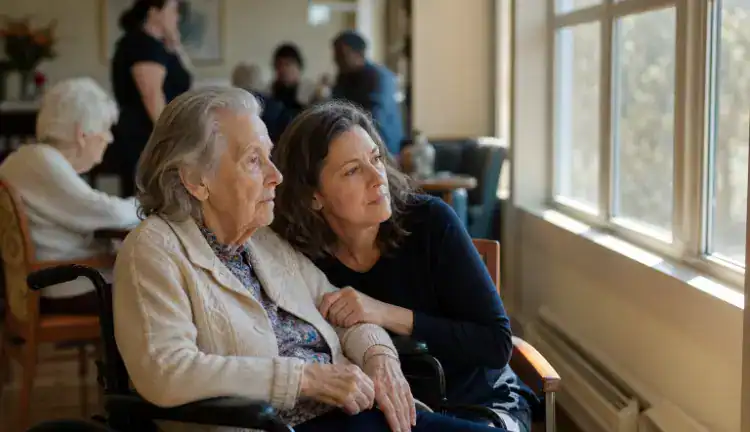
The rights of the elderly, particularly those who have suffered abuse, neglect, or assault in a nursing home, may be seriously impacted in the near future. Last year, as President Obama’s final term was winding down, his administration stopped allowing nursing homes that receive federal funding from requiring that their new residents sign a binding arbitration agreement. Binding arbitration agreements prevent plaintiffs — in this case the elderly residents — from ever taking the nursing homes to court. Instead, the residents would be forced into an out-of-court arbitration conducted by an industry-friendly arbitrator.
This rule had the potential to make a significant impact on both nursing homes and their residents, since most nursing homes receive federal funding. However, it was never fully realized, leaving both the individuals living in nursing homes and the institutions themselves in limbo. Before the rule could be enacted, the nursing home industry along with the American Health Care Association sued the Department of Health and Human Services and the Centers for Medicare and Medicaid Services. They contended that the proposed rule violated the Federal Arbitration Act and overstepped a federal agency’s authority, and they won a temporary injunction, halting it.
Now, as the current administration unravels many Obama-era policies, it seems likely that this one will never come to fruition. In June, the CMS announced its plan to do away with the rule. However, more than 75 consumer, health, and advocacy groups joined together as the Fair Arbitration Now Coalition to oppose the CMS’ effort to reverse this protection for the elderly. They claim that pre-dispute arbitration agreements create an unequal balance of power in favor of nursing homes. Additionally, many new nursing home tenants are not aware that they’re signing away their right to sue.
Following the slew of hurricanes that have buffeted the east and southern coasts in recent weeks, 46 House Democrats wrote a letter to CMS Administrator Seema Verma demanding change. “The horrific reports of abuse at facilities in Florida and Texas in the wake of Hurricanes Irma and Harvey underscore the need for your agency to reconsider upending the legal protections of those who have worked and saved for their entire lives to retire with dignity,” the letter stated. “This is a time when we should be protecting our nation’s seniors, not rolling back their fundamental right to hold wrongdoers accountable for neglect and abuse.”
The attorneys general of 16 states, including those of New York and Washington, D.C., have sent comments to the CMS opposing the reversal of the Obama rule. The AGs said in their comments: “Pre-dispute binding arbitration agreements in general can be procedurally unfair to consumers, and can jeopardize one of the fundamental rights of Americans; the right to be heard and seek judicial redress for our claims.”
While the AGs said they do not oppose arbitration agreements that are mutually agreed upon by both parties after a dispute, they do oppose them upon entrance to a nursing home— particularly because families who need to place their loved ones in a care facility do not have the option to object to arbitration agreements, or find another nursing home that does not require them to be signed. Said Washington D.C. AG Karl A. Racine, “We are urging the Trump administration not to force vulnerable residents to sign away their own rights to gain the care they need.”
Sources:
Lee, Bruce Y. “You May Lose Right To Sure Nursing Homes, If Obama’s Rule Is Overturned.” Forbes 07 August 2017.
Leonhardt, Megan. “The Trump Administration Wants to Kill a Rule Protecting Elderly from Nursing Home Abuses.” Time 05 June 2017.
Roubein, Rachel. “House Democrats plead for right of residents to sue nursing homes.” The Hill 04 October 2017.
Wheeler, Lydia. “Fight Over Right To Sue Nursing Homes Heats Up.” The Hill 06 August 2017.
Wheeler, Lydia. “16 States, DC Push Trump Admin To Protect Right To Sue Nursing Homes.” The Hill. 08 August 2017
Related Practice Areas
Image note: photographs accompanying our blog articles are illustrative and digitally created. They do not depict actual clients, actual attorneys of this firm, or actual events.
Read more

E-Bike, Scooter and Bicycle Accidents in New York City: Who Pays
After most e-bike accidents in New York, the no-fault insurer of the car, truck or bus that hit you pays first. That coverage pays medical bills and part of lost pay up to fifty thousand dollars under Insurance Law 5102(a), but nothing for pain, which takes a lawsuit, a serious injury and a share of […]

Brain Injury From a Hospital Mistake in New York: What a Malpractice Claim Must Prove
Yes, you can sue a New York hospital for a brain injury when hospital negligence, a departure from accepted practice, caused the loss of oxygen. Most hospitals allow two years and six months under CPLR 214-a. An NYC Health + Hospitals facility requires a notice of claim within ninety days under General Municipal Law 50-e. […]

Snow and Ice Falls in New York City: Who Had to Clear It and When
Under NYC snow removal rules, the property owner next to a sidewalk has four hours to clear it after daytime snow stops, and until the next morning after evening or overnight snow. The stop time also decides whether the “it was still snowing” defense applies, and that fact disappears as fast as the ice. How […]