
35 Patients Dead After A Medical Device Manufacturer Started Cutting Corners
In the five years between January 2010 and October 2015, roughly 350 patients have undergone gastrointestinal procedures with contaminated scopes produced by the Tokyo-based company Olympus Corp. Dozens have died as a result.
The product, called the duodenoscope, is used in 700,000 procedures every year in America alone. Doctors insert the scope into patients’ throats in order to identify and treat health problems in the digestive tract. A design flaw makes the duodenoscope difficult to clean between procedures, allowing the transfer of bacteria from patient to patient. So far, we have seen outbreaks in Los Angeles, Milwaukee, and Denver among other American cities.
The worst part about this story is that Olympus has been aware of its design flaw for years. They chose to ignore it.
In 2012, an independent investigator hired by Olympus found that the duodenoscope tended to trap blood and tissue of the patients on whom it was used. He urged the company to launch a worldwide investigation into similar products and recall those found to endanger patients. But no worldwide investigation was launched.
In January 2013, following outbreaks in France and Holland, Olympus warned its European customers of the duodenoscope’s infection risk. But no warning was given to American hospitals.
Later that month, Pennsylvania-based Olympus VP Laura Storms sent an email to Susumu Nishina, the company’s chief manager for market quality administration, asking if American executives should “also be communicating to our users the information that [Olympus Europe] is communicating to their European users?”
The response she received stated that Ms. Storms should only discuss the health risk with customers that ask questions about it. No broad warning should be issued because the risk was deemed “acceptable.”
Since that email was sent, 35 patients have died in American hospitals as a result of infected duodenoscopes.
Ms. Storms did not stop there. She wrote another email to Nishina to request additional details about the company’s determination that previous infections were caused by hospital error, not the design flaw. “Specifically what evidence does OMSC [Olympus Japan] have that supports inadequate reprocessing by UPMC [University of Pittsburgh Medical Center]? You do not cite any objective findings, testing, etc. for this endoscope model,” Ms. Storms wrote.
However, the company insisted that the duodenoscope was safe, and “no major observations were noted during the inspection.”
Olympus finally recalled the duodenoscope this January, after a congressional report condemned the company for its decision not to warn patients and hospitals of the device’s health risks. The recall is still ongoing, and expected to conclude later this month.
Olympus maintains that no wrongdoing was done. In a statement, they insisted “patient safety is our top priority. The duodenoscope issue continues to receive the highest level of attention at Olympus, and we remain committed to working with the proper authorities and our stakeholders to understand and address the potential root causes.”
One look at the company’s internal emails reveal that patient safety is most certainly not Olympus’ top priority. Olympus executives made a conscious choice to withhold information about the duodenoscope’s design flaw from American hospitals. It was a financial decision that resulted in dozens of preventable American deaths.
Now, the families of those killed are suing Olympus, alleging negligence. Hopefully, these lawsuits send a strong message that profits should never be placed above human lives.
Sources: Mangan, Dan, “35 deaths linked to scope infections after Olympus told execs not to warn hospitals,” CNBC, 25 July 2016.
Terhune, Chad, “Olympus told its U.S. executives no broad warning about tainted medical scopes was needed, despite superbug outbreaks,” Los Angeles Times, 24 July 2016.
Related Practice Areas
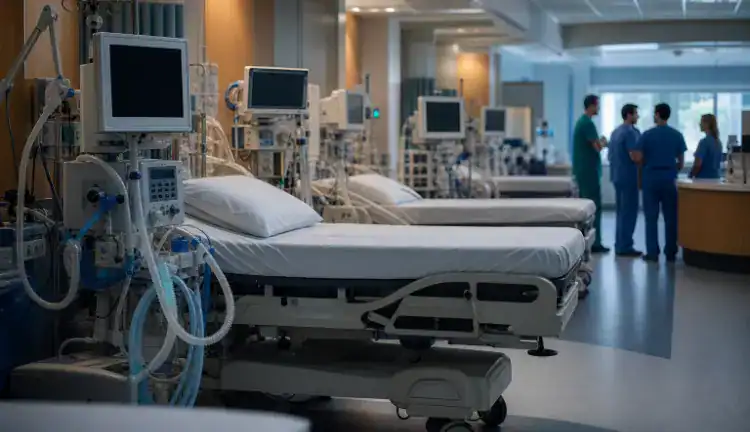
Image note: photographs accompanying our blog articles are illustrative and digitally created. They do not depict actual clients, actual attorneys of this firm, or actual events.
Read more

E-Bike, Scooter and Bicycle Accidents in New York City: Who Pays
After most e-bike accidents in New York, the no-fault insurer of the car, truck or bus that hit you pays first. That coverage pays medical bills and part of lost pay up to fifty thousand dollars under Insurance Law 5102(a), but nothing for pain, which takes a lawsuit, a serious injury and a share of […]

Brain Injury From a Hospital Mistake in New York: What a Malpractice Claim Must Prove
Yes, you can sue a New York hospital for a brain injury when hospital negligence, a departure from accepted practice, caused the loss of oxygen. Most hospitals allow two years and six months under CPLR 214-a. An NYC Health + Hospitals facility requires a notice of claim within ninety days under General Municipal Law 50-e. […]

Snow and Ice Falls in New York City: Who Had to Clear It and When
Under NYC snow removal rules, the property owner next to a sidewalk has four hours to clear it after daytime snow stops, and until the next morning after evening or overnight snow. The stop time also decides whether the “it was still snowing” defense applies, and that fact disappears as fast as the ice. How […]