
Saudi Government May Be to Blame for Deadly Crane Collapse

The crane that collapsed in Mecca’s Grand Mosque in Saudi Arabia last week killed at least 107 worshippers and injured over 200 more. In the face of such a large-scale tragedy, we expected to hear an explanation from the Saudi Binladin Group, the construction conglomerate responsible, or at the very least an apology.
Instead, strong winds were blamed for the collapse, and an engineer for the construction project described it as an “act of God.” This unsatisfactory response is particularly frightening because the Saudi Binladin Group has a close relationship with the Saudi government and currently holds $27 billion worth of government construction contracts in Mecca. An investigation into the collapse found that the Saudi Binladin Group had not erected the crane in accordance with manufacturer instructions.
Tragic accidents happen in every country, but what makes the crane collapse so frustrating is that it could have been avoided if better safety precautions had been taken. For this, the Saudi Arabian rule of law is partly to blame. Saudi Arabia has no civil penal code that lays out the sentencing rules for an incident like this. The Islamic practice of diyya allows wealthy defendants to pay their victims “blood money” in order to escape punishment. Under Islamic Sharia law, the lives of Muslim women are worth half those of Muslim men. Non-Muslims are worth just a small fraction of that. This means that even the worst crimes can be forgiven with a simple payment to the victim or the victim’s family.
What incentive does the Saudi Binladin Group have to spend money on safety precautions when the consequences for a catastrophe are so minimal?
Laws influence behavior, and when a legal code is weak or vague, it allows wealthy individuals and corporations to exploit it. Those of us fortunate enough to live in the United States are accustomed to an environment where victims are protected by our laws. We trust that if we find ourselves the victim of a tragedy, we will be compensated for our losses, while the guilty party is appropriately punished. This is a trust founded on logical and transparent personal injury laws that encourage safe behavior, something Saudi Arabia is sorely in need of right now.
Sources: Al-Nahhas, Lynne, “Muslims Flock to Hajj Despite Deadly Crane Collapse,” Yahoo News, 18 September 2015.
Norimine, Hayat, “Four Things to Know About the Saudi Binladin Group,” Albawaba, 16 September 2015.
Related Practice Areas
Image note: photographs accompanying our blog articles are illustrative and digitally created. They do not depict actual clients, actual attorneys of this firm, or actual events.
Read more
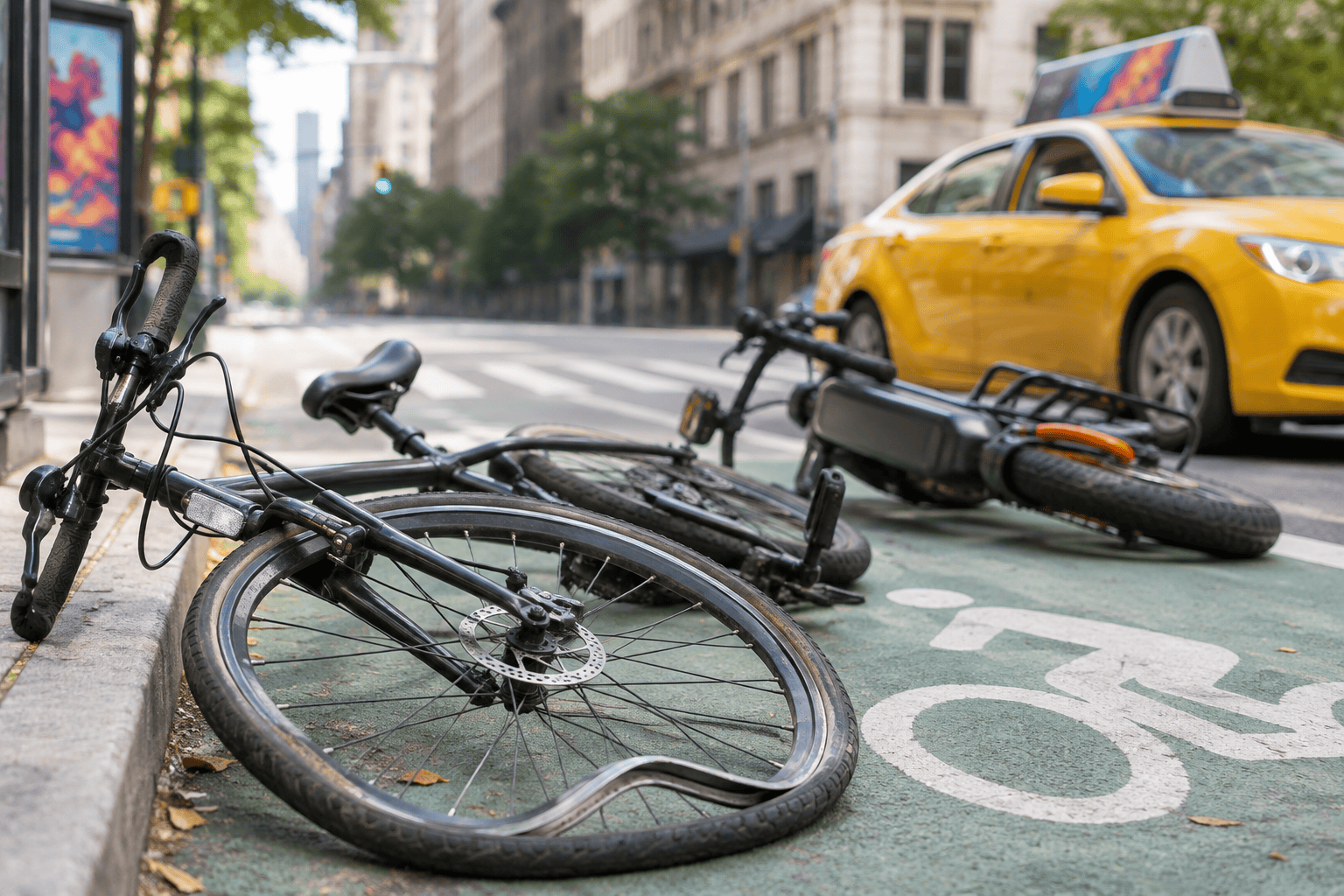
E-Bike, Scooter and Bicycle Accidents in New York City: Who Pays
After most e-bike accidents in New York, the no-fault insurer of the car, truck or bus that hit you pays first. That coverage pays medical bills and part of lost pay up to fifty thousand dollars under Insurance Law 5102(a), but nothing for pain, which takes a lawsuit, a serious injury and a share of […]

Brain Injury From a Hospital Mistake in New York: What a Malpractice Claim Must Prove
Yes, you can sue a New York hospital for a brain injury when hospital negligence, a departure from accepted practice, caused the loss of oxygen. Most hospitals allow two years and six months under CPLR 214-a. An NYC Health + Hospitals facility requires a notice of claim within ninety days under General Municipal Law 50-e. […]

Snow and Ice Falls in New York City: Who Had to Clear It and When
Under NYC snow removal rules, the property owner next to a sidewalk has four hours to clear it after daytime snow stops, and until the next morning after evening or overnight snow. The stop time also decides whether the “it was still snowing” defense applies, and that fact disappears as fast as the ice. How […]