
Will the Chinatown Bus Shutdowns Really Curb Bus Accidents?
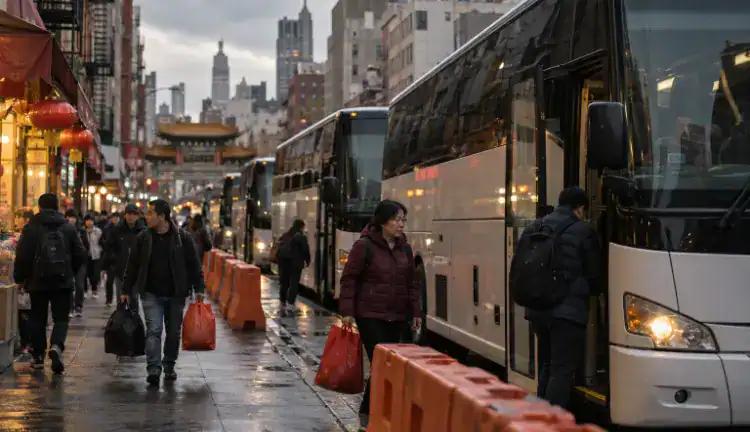
The U.S. National Transportation Safety Board is now facing accusations that it skewed a study in 2011 precipitating the closing Fung Wah, Sky Express and 24 other Chinatown bus companies.While it appears the Transportation Safety Board made an error in their classification of bus companies, I have represented clients in enough catastrophic accidents involving both Chinatown and traditional terminal-based bus companies to know that curbside buses leave a lot to be desired in the safety category.Just this year I resolved a case for a young father who was killed and a woman who was badly injured on a Sky Express bus accident in 2006, and I am in the early stages of a trial for another Sky Express accident that occurred in 2011, causing the deaths of several passengers.I am also preparing a case for a 2011 accident involving a Worldwide Tours bus, in which over 50 people were killed or injured, and I was recently retained by the family of a young man who was killed in Universal Bus Travel accident in 2013.I have a career’s worth of experience working for victims of accidents caused by the negligent business practices of Chinatown bus companies. I have found time and again that these companies are extremely successful at evading authorities in order to continue putting their passengers’ lives at risk by cutting corners, and I think that the closing of 26 of these companies back in March was no more than a small step in the right direction.One of the largest of these companies was Sky Express, a company that transported passengers between North Carolina and New York’s Chinatown, and whose dangerous cost-cutting practices have caused a number of accidents for which I have represented the victims. Though Sky Express was shut down in 2011, the Department of Transportation never followed through in confiscating the neglected buses they had in operation.Since then, it has been reported that two new bus companies, Ming An and General Bus, have cropped up and inherited much of what was left over from Sky Express. Over half of the vehicles belonging to General Bus were purchased from Sky Express, and half of their drivers were formerly employed by Sky Express, according to the Charlotte Observer. Ming An is also using Sky Express buses and drivers.Since its inception Ming An has been cited and fined numerous times for speeding or having drivers without commercial licenses. According to the Federal Motor Carrier Safety Administration’s records the company is in the bottom .2 percent of bus companies in driving safety.The authorities closed down Sky Express in name only. The same hazardous vehicles and unqualified drivers are still out on the road today.What is scariest about these bus companies is how their cheap prices continue to attract a large client base. The rock bottom rates offered by companies like Ming An, General Bus, and until recently, Fung Wah and Sky Express, combined with their flagrant disregard for safety puts low-income passengers in the difficult position of choosing between their wallets and their lives.The popularity of these Chinatown bus companies represents a real need for low cost transportation between cities in the east coast. But it should never come at the expense of passenger safety.Sources:Bloomberg, “NTSB Defends Study Preceding Chinatown Bus Safety Sweep,” by Jeff Plung, May 19, 2013. Charlotte Observer, “Sky Express Driver Sentenced, But Unsafe Drivers Still Remain,” by Eli Portillo, January 24, 2013.
Related Practice Areas
Image note: photographs accompanying our blog articles are illustrative and digitally created. They do not depict actual clients, actual attorneys of this firm, or actual events.
Read more

E-Bike, Scooter and Bicycle Accidents in New York City: Who Pays
After most e-bike accidents in New York, the no-fault insurer of the car, truck or bus that hit you pays first. That coverage pays medical bills and part of lost pay up to fifty thousand dollars under Insurance Law 5102(a), but nothing for pain, which takes a lawsuit, a serious injury and a share of […]

Brain Injury From a Hospital Mistake in New York: What a Malpractice Claim Must Prove
Yes, you can sue a New York hospital for a brain injury when hospital negligence, a departure from accepted practice, caused the loss of oxygen. Most hospitals allow two years and six months under CPLR 214-a. An NYC Health + Hospitals facility requires a notice of claim within ninety days under General Municipal Law 50-e. […]

Snow and Ice Falls in New York City: Who Had to Clear It and When
Under NYC snow removal rules, the property owner next to a sidewalk has four hours to clear it after daytime snow stops, and until the next morning after evening or overnight snow. The stop time also decides whether the “it was still snowing” defense applies, and that fact disappears as fast as the ice. How […]